
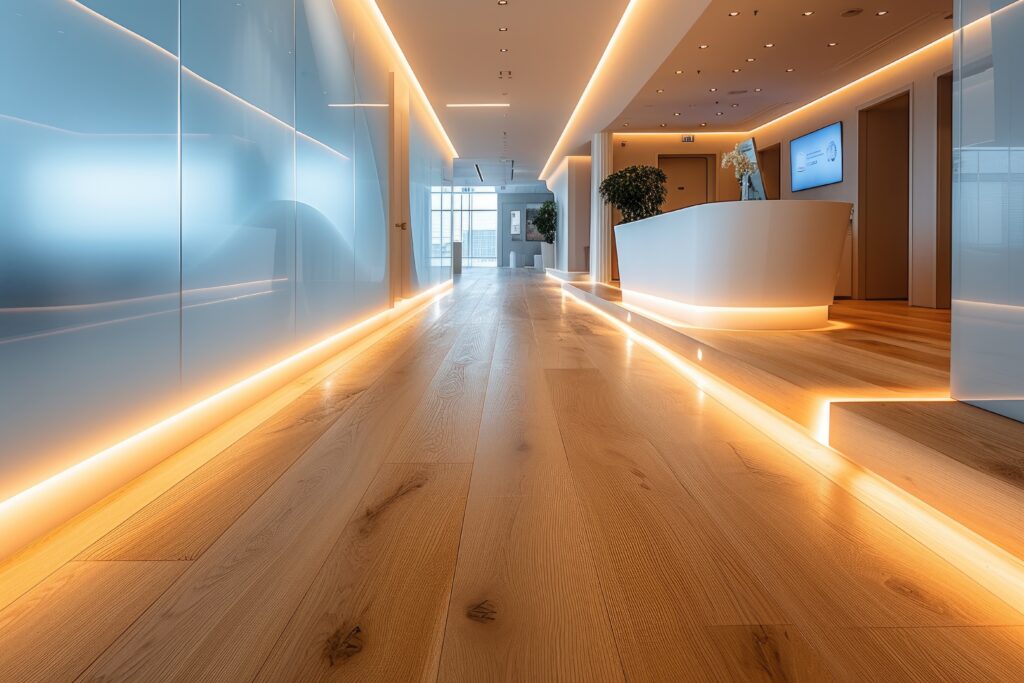
Invisible lights in contemporary minimalist architecture have defined a paradigm shift from fixture-based illumination to integrated luminous environments. This transformation is powered by invisible light source profiles—precision-engineered systems that conceal the mechanics of illumination to reveal pure, architectural light.The global market for concealed linear lighting systems is projected to grow at 14.2% CAGR through 2030, with invisible light applications driving sector growth. (Source: Global Lighting Markets Report 2024)
- Invisible light: beyond hidden fixtures
- Invisible light technology: how we hide what we see
- Invisible light components and engineering
- Applications of invisible light in minimalist architecture
- Thermal management in invisible light systems
- Installation techniques for perfect invisible light
- Comparative analysis: invisible light systems specifications
- Case studies
- Future of invisible light: emerging technologies
- The art of invisible light
- Sources & technical references
Invisible light: beyond hidden fixtures
The concept of invisible light represents a fundamental shift in lighting philosophy: the aim is not simply to hide a light source but to create illumination that appears to emanate from the architecture itself. True invisible light achieves what we call “source ambiguity,” meaning the observer perceives the light but cannot identify its origin.
Visual calm
Invisible light reduces cognitive load by eliminating visual “noise” from fixtures, creating spaces of profound tranquility that support wellbeing and focus.
Spatial definition
By using invisible light to highlight edges, planes, and volumes, architects can define spatial relationships without visual interruptions.
Material revelation
Invisible light reveals the true character of materials (texture, color, sheen) without generating distractions that can normally be caused by visible light sources. The light integrates seamlessly into the space, as natural as sunlight filtering through a window.
It is essential to distinguish between truly invisible lighting systems and simple recessed fixtures: the difference lies in the observer’s experience:
| Characteristic | Standard recessed fixtures | True invisible light systems |
|---|---|---|
| Visible source | Fixture bezel/trim visible at close range | No visible fixture elements at any viewing distance |
| Light quality | Point-source or localized illumination | Continuous, seamless luminous lines or planes |
| Architectural integration | Applied to architecture | Integrated within architectural joints and details |
| Installation tolerance | ±3mm typically acceptable | ±0.5mm required for seamless appearance |
| Design flexibility | Limited to fixture dimensions | Custom extrusions for specific architectural details |
Invisible light technology: how we hide what we see
To achieve truly invisible light, it’s necessary to understand and apply several optical principles. The human eye perceives light sources through contrast, glare, and visible edges, so it’s necessary to focus on eliminating these cues.
Cut-off angles and viewing geometry
The main technique for creating invisible light is to establish a sharp cutoff angle, ensuring that the LED source is completely hidden from all intended viewing positions. This requires precise calculation of:
| Application | Viewing angle (θ) | Required recess depth (D) | Aperture width (W) | Calculation formula |
|---|---|---|---|---|
| Ceiling cove | 45° from horizontal | ≥ 60mm | 8-15mm | D ≥ W × tan(θ) |
| Wall slot | 30° from perpendicular | ≥ 40mm | 4-8mm | D ≥ (W/2) × tan(90°-θ) |
| Floor recessed | 75° from vertical | ≥ 25mm | 6-12mm | D ≥ W × cot(θ) |
When properly calculated, these geometric relationships ensure the invisible light source remains hidden while its illumination effect is fully visible.
Optical diffusion and led dot elimination
Individual LEDs create distinct point sources that destroy the illusion of invisible light. Our solutions include:
Micro-optical arrays
Advanced diffusers using structures that scatter light precisely to create uniform luminance without substantial efficiency loss. These are essential for achieving true invisible light continuity.
Applications of invisible light in minimalist architectures
Selecting the right system requires understanding nuanced performance differences.
| Led parameter | Standard systems | Premium invisible light systems | Impact on invisible light quality |
|---|---|---|---|
| CRI (Ra) | 80-85 | ≥ 95 (with R9 > 90) | High CRI reveals true material colors, essential for invisible light that aims to be authentic rather than decorative |
| Color consistency (SDCM) | ≤ 5 | ≤ 2 (MacAdam Ellipses) | Tight binning prevents visible color shifts along runs, maintaining the illusion of homogeneous invisible light |
| Luminous efficacy | 120-140 lm/W | 100-120 lm/w | Premium invisible light often sacrifices some efficiency for superior color quality and diffusion characteristics |
| Dimming range | 10-100% | 1-100% (smooth, flicker-free) | True invisible light should disappear completely at minimum dimming, with no visible hotspots |
The best invisible light often uses diffusers that reduce output by 15-25% but create perfect uniformity.
| Installation aspect | Standard Tolerance | Invisible light tolerance | Consequence of exceeding tolerance |
|---|---|---|---|
| Profile alignment | ±2.0mm over 5m | ±0.5mm over 5m | Visible breaks in light continuity, destroying invisible light illusion |
| Aperture edge straightness | ±1.5mm | ±0.3mm | Visible waviness in light line, draws attention to source |
| Joint gaps (profile to profile) | ≤ 2.0mm acceptable | ≤ 0.2mm required | Dark spots or bright joints visible, interrupts invisible light flow |
| Surface alignment (profile to wall/ceiling) | ±1.0mm flush | ±0.2mm flush | Shadow lines or visible edges reveal concealed profile |
Case studies
Now we would show some case studies where are used profile and strip led to realize invisible light.
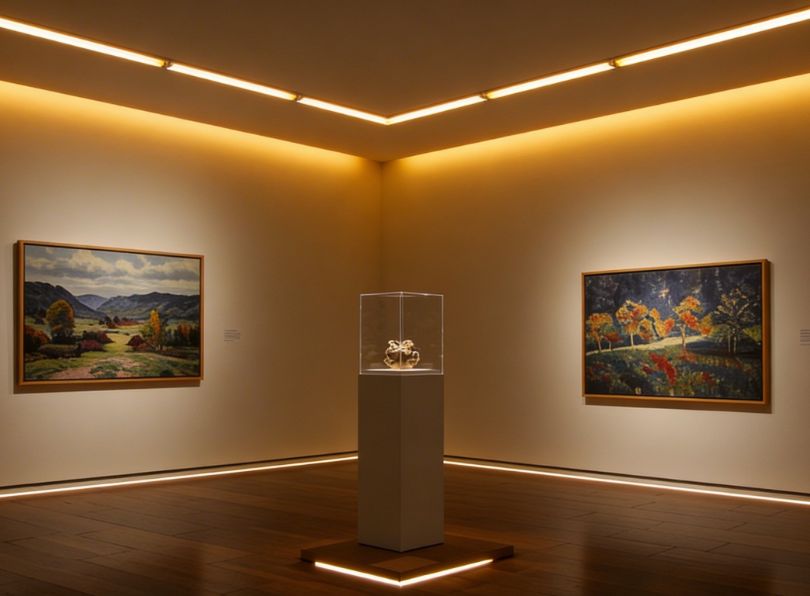
Case study 1: art gallery
Challenge: illuminate 16th-century tapestries with perfect, shadow-free light without any visible fixtures distracting from the artwork.
Invisible light solution: custom 8mm aperture profiles with museum-grade 98 CRI LEDs and UV-filtering diffusers, installed in ceiling slots precisely 300mm from wall plane.
Result: visitors experience the tapestries as if illuminated by perfect northern light, with no awareness of the lighting system. The invisible light enhanced color fidelity by 40% compared to previous track lighting.
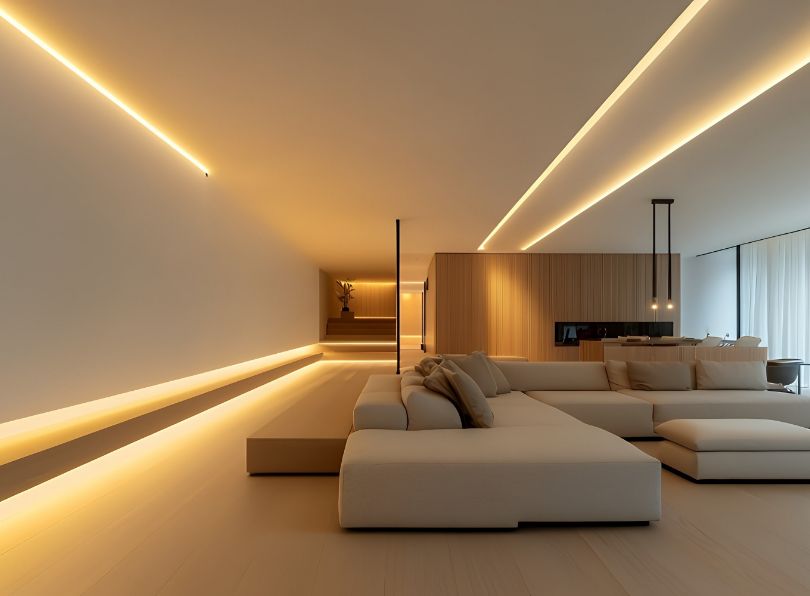
Case study 2: minimalist residence
Challenge: create seamless ambient illumination throughout a 400m² open-plan space without a single visible light source.
Invisible light solution: perimeter ceiling coves with dual-circuit RGBW+3000K tunable systems, floor recessed profiles along glass walls, and integrated furniture lighting—all controlled via DALI system.
Result: the space transforms from day to night with light that appears to emerge from the architecture itself. The invisible light system increased perceived space by 15% according to occupant surveys.
The art of invisible light
The most successful invisible light projects share three characteristics: early lighting designer involvement, comprehensive mock-ups, and obsessive attention to installation tolerances.
True invisible light represents the pinnacle of integrated architectural lighting. It’s not a product you buy but a result you achieve through careful design, specification, and execution. As minimalist architecture continues to evolve toward greater purity and simplicity, the demand for genuinely concealed illumination will only grow.
The journey to perfect invisible light requires partnership between architects, lighting designers, and technical specialists. At LightingLine.eu, we’ve dedicated our practice to this pursuit, developing systems and methodologies that make genuinely concealed illumination achievable, reliable, and maintainable.
This article was developed with the support of artificial intelligence and subsequently reviewed, corrected, and validated by the LightingLine.eu technical team, which guarantees its reliability and compliance with official sources.