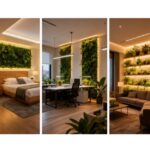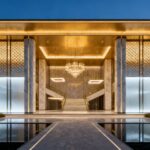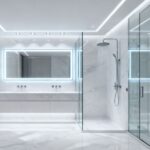
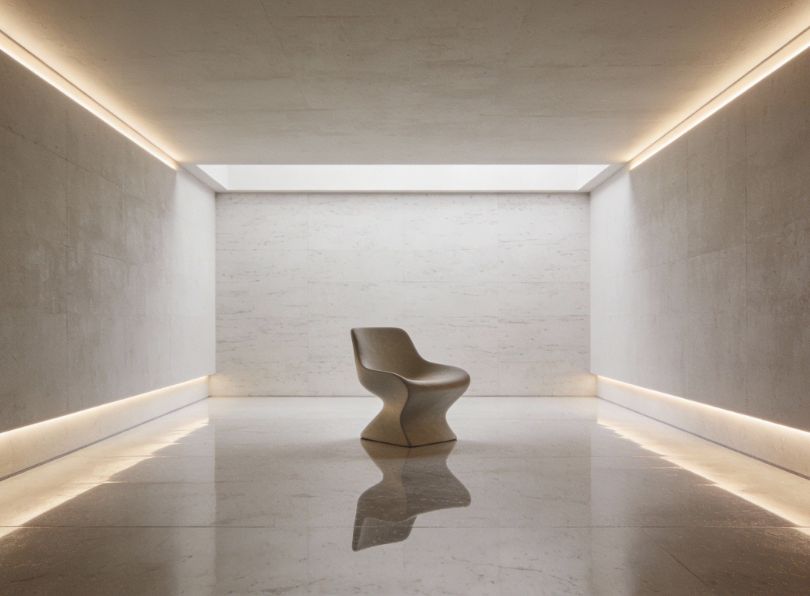
Lighting has transcended its purely utilitarian function to become a fundamental, expressive material in the architect’s and designer’s palette. In contemporary interior and architectural design, lighting is no longer an afterthought but a primary element that shapes spaces, influences emotions, and defines experiences.
In this article…
- The new language of architectural lighting
- The technical foundations of modern lighting systems
- Aluminium profiles: the unsung heroes of sophisticated lighting
- Current and emerging trends in architectural lighting
- The integrated design process: from concept to illuminated reality
- Smart technology and advanced control systems
- Sustainability, well-being, and the human-centric future
- Envisioning the luminous architecture of tomorrow
The new language of architectural lighting
The seamless integration of light sources within meticulously engineered aluminium profiles from specialists like Lightinline represents the cutting edge of this discipline, allowing for the creation of clean, continuous lines of light that are as much a part of the structure as the walls and ceilings themselves.
This article provides an exhaustive exploration for architects and interior designers of the critical interplay between advanced technology, the precision of lighting profiles, and transformative trends, serving as both a technical manual and a source of creative inspiration.
The technical foundations of modern lighting systems
Core principles and quality metrics
The Color Rendering Index (CRI or Ra) and Correlated Color Temperature (CCT) are essential parameters. A high CRI (90+) ensures that materials, fabrics, and finishes appear vibrant and true to life. CCT, measured in Kelvin (K), dictates the perceived warmth or coolness of the light.
The construction quality of Lightinline aluminium profiles guarantees optimal thermal management, extending the useful life of light sources and maintaining color consistency over time.
Aluminium profiles: the unsung heroes of sophisticated lighting
In the pursuit of architectural elegance and technical excellence, the true quality of a lighting installation is often defined not by the light source alone, but by the framework that contains, controls, and perfects it. While much attention is paid to the specification of LEDs and control systems, it is the aluminium lighting profile that serves as the critical interface between raw technology and refined architectural expression. This system is the unsung hero—a multifunctional chassis that transforms a simple strip of light into an integral, high-performance building element.
The following section delves into the essential functions and inherent benefits of professional profile systems, revealing why they are a non-negotiable component for quality-driven projects. We will then explore the comprehensive taxonomy of profile types within the Lightinline portfolio, providing a clear guide to selecting the precise solution for any architectural or interior design scenario, from discreet cove lighting to robust exterior applications.
Functions and benefits of professional profile systems
An aluminium profile is much more than a simple housing; it is a multifunctional component that elevates a lighting system from a component to a finished architectural element. Thermal management is its primary engineering function. Lightinline aluminium profiles act as heat sinks, extending the operational life of the entire system.
Secondly, profiles provide mechanical protection and a secure mounting platform. They protect delicate components from physical damage, dust, and, in high IP-rated versions, moisture. Finally, and most visibly, they define the optical quality and aesthetic finish of the light. By incorporating polycarbonate or PMMA diffusers (opal, clear, prismatic), they transform light emission into soft, glare-free illumination, perfectly integrating the source into the architecture.
A detailed taxonomy of profile types and their applications
The Lightinline portfolio showcases a sophisticated range designed for every conceivable application. Understanding this taxonomy is key to precise specification.
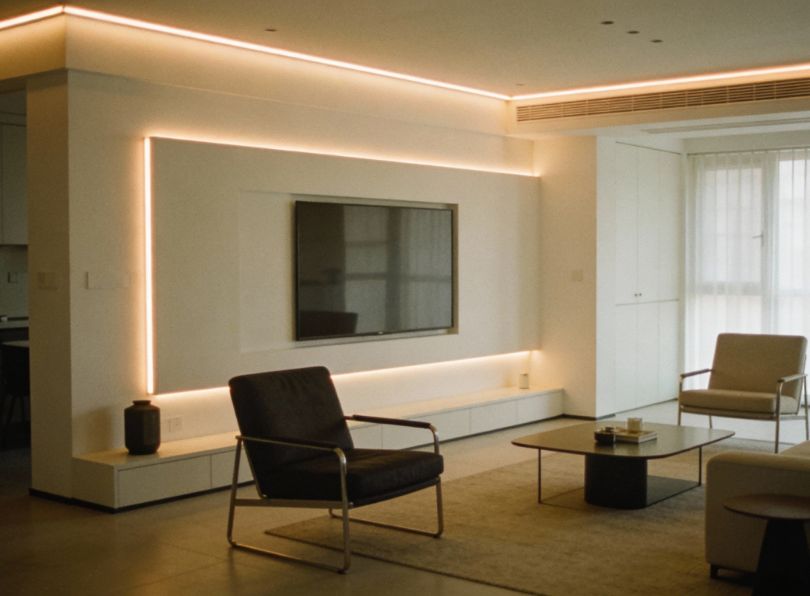
Recessed profiles (fixed or suspended): designed to be integrated into another surface, creating a sleek, flush finish. Ceiling cove profiles are installed at the wall-ceiling junction to create an soft, indirect upward wash. Floor lighting profiles, with impact-resistant diffusers, are used for pathway lighting or to define perimeters in commercial spaces. Furniture and shelf profiles are typically smaller and integrate into joinery.
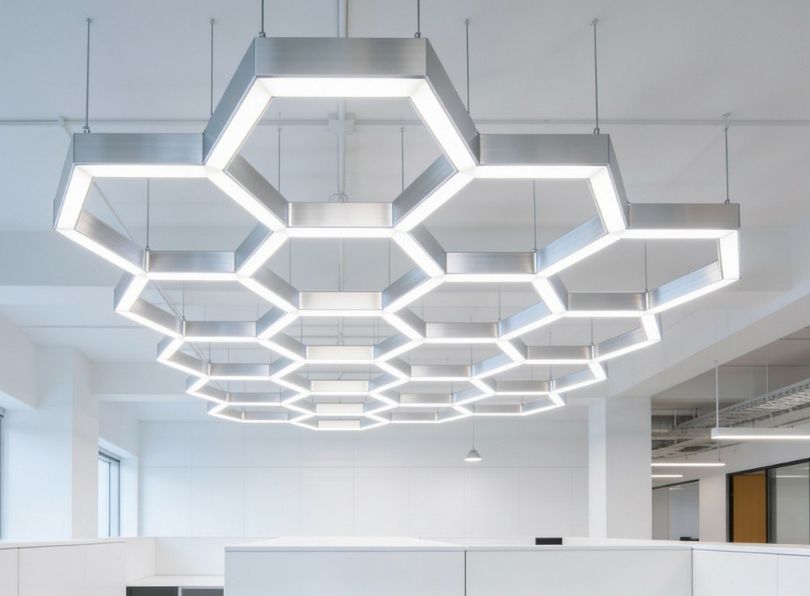
Surface-mounted and suspended profiles: when recessing is not possible, these profiles become the aesthetic feature. Surface-mounted tracks can be fixed directly to a wall or ceiling. Suspended or pendant profiles are hung with cables or rods, creating dramatic linear chandeliers.
Specialist and high-IP profiles: for demanding environments. Wet location profiles with IP65-IP67 rating, with sealed end caps and gasketed diffusers, are mandatory for kitchen backsplashes, bathroom mirrors, outdoor steps, and facade lighting. Corner profiles (90-degree or angled) allow for continuous light lines around corners.
| Design scenario / Location | Recommended profile type | Key functional requirement | Aesthetic & Optical goal |
|---|---|---|---|
| Residential: kitchen under-cabinet | Small, surface-mounted or recessed furniture profile. | Good thermal management; easy access for maintenance. | Glare-free task lighting; discreet, integrated look. |
| Commercial: office ceiling cove | Large, recessed cove profile. | Ability to handle long runs; secure mounting to structure. | Uniform indirect wash to reduce eye strain. |
| Hospitality: bar front or shelving | Suspended or shelf profile with clear/prismatic diffuser. | Robust construction; excellent dissipation. | Accent lighting to highlight bottles and glassware. |
| Retail: display case | Ultra-slim, recessed profile. | Precise optical control (beam angle). | Dramatic, focused accent lighting. |
| External: architectural facade grazing | High IP (IP67) profile with metal or polycarbonate diffuser. | Full weatherproofing; corrosion-resistant aluminium alloy. | Reveal texture and create striking nighttime identity. |
Synergy with diffusers and optical control
The diffuser is the final, critical interface between the light source and the human eye. The choice of material and finish dramatically alters the visual result. An opal (milky) polycarbonate diffuser provides the highest level of diffusion. A clear polycarbonate diffuser offers minimal light loss. For seamless integration, plaster-in profiles are designed to be plastered and painted over, so that once finished, only a perfect, continuous line of light is visible.
| Profile system component | Primary function | Lightinline advantage |
|---|---|---|
| Aluminium body | Structural integrity, heat dissipation, mounting base | Precision extrusion, optimal thermal mass, anodized/powder-coated finishes |
| Diffuser (opal/clear/PMMA) | Light diffusion, glare control, visual finish | High-transmission materials, UV-stable options, various optical patterns |
| Mounting system | Secure installation, alignment | Integrated clips, adjustable brackets, plaster-in solutions |
| End caps & accessories | Finish protection, IP rating, electrical safety | Aesthetic matching, silicone gaskets for sealing, easy maintenance |
Current and emerging trends in architectural lighting
The evolution of architectural lighting is being driven by three interconnected forces: aesthetic refinement, technical precision, and intelligent integration. Designers are no longer merely concealing functional hardware but are embracing aluminium profiles as a deliberate, customizable design element in their own right. Simultaneously, the path from a luminous concept to a flawless built reality demands a rigorous, detail-oriented specification process.
Materiality, finish, and customization
The aesthetic of the profile itself is receiving greater attention. While classic satin silver anodized aluminium remains a staple, there is increasing demand for custom powder-coated finishes. Designers can now specify profiles in matte black, brushed brass, charcoal, or any RAL color. Furthermore, the drive towards bespoke solutions is stronger than ever. Manufacturers are increasingly offering services to create custom profile cross-sections for unique projects.
The integrated design process: from concept to illuminated reality
The infrastructure of the profile itself is evolving into a smart platform, seamlessly embedding intelligence within the architecture. This section explores these critical progressions, from the rising trend of material customization, through the disciplined stages of technical design, to the pivotal role profiles play in the connected, responsive buildings of tomorrow.
Technical specification and detailing
This is the most critical phase for ensuring the design vision is buildable and will perform as intended.
- Profile system specification: select the profile type based on installation (recessed, surface, suspended). Choose the specific model from the Lightinline catalogue that matches the required mechanical dimensions and provides the necessary thermal capacity. Specify the diffuser type and its IP rating. Detail the finish and mounting method.
- Integration details: create detailed cross-sectional drawings showing exactly how the profile integrates with the surrounding construction. This level of detail prevents costly on-site clashes.
Smart technology and advanced control systems
Sustainability, well-being, and the human-centric future
In the pursuit of sustainable architecture that prioritizes human well-being, the longevity and lifecycle impact of building components are paramount. True sustainability is achieved not just through operational efficiency but through durable material choices and systems designed for a circular future.
Energy efficiency and lifecycle assessment
The combination of a high-quality system with an effective aluminium profile for thermal management ensures a long lifespan, minimizing waste from frequent replacements. The next consideration is material choice and recyclability. Lightinline aluminium profiles are inherently sustainable; aluminium is highly recyclable without loss of quality, and the extrusion process is relatively efficient.
Envisioning the luminous architecture of tomorrow
The future of architectural and interior design is inextricably linked to the evolution of lighting. This future is characterized by light that is seamlessly integrated, dynamically responsive, and fundamentally human-centric. The technical building blocks—from the thermal prowess of Italian-designed aluminium profiles to the intelligence of IoT-enabled systems—are already here.
The role of the architect and designer evolves into that of a “lighting choreographer”. Success lies in mastering the intricate dance between the physics of light, human perception, the poetry of space, and the pragmatics of technology and installation. It requires deep collaboration with technical partners like Lightinline from the earliest conceptual stages. The result is no longer merely illuminated spaces, but experiential environments that enhance well-being, tell a story, and adapt to the rhythms of life within them.
Ready to transform your next project?
Discover the complete range of Lightinline aluminium profiles designed for architectural integration, maximum heat dissipation, and high-quality finishes.
Consult the technical catalogue and request support for your design specification.
Lighting Line UAB
V. Nageviciaus str. 3, 08237 Vilnius (LT)
Phone +370 5 2559408
VAT payer’s code LT100010316810
www.lightingline.eu