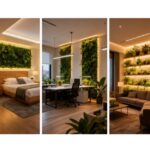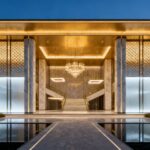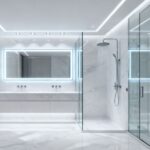
LED profile finishes now allow you to bring decorative lighting to life. For years considered purely functional accessories, destined to disappear, aluminum profiles are becoming discreet protagonists of architectural detail.
It’s no longer a matter of “camouflaging” an element, but of orchestrating a visual dialogue between different materials. The real challenge is not pretending the profile isn’t there, but strategically choosing its color to enhance its surroundings.
In this article, we analyze how to integrate the Lightinline palette—silver, white, and black—with the most common architectural surfaces, transforming a technical constraint into an aesthetic opportunity.
In this article…
- Finishes and awareness: the shift of recent years
- Why aluminum is the ideal base for chromatic integration
- Anodized Silver: dialogue with metals and industrial surfaces
- White: the key for stone, light woods, and drywall
- Black: elegance, depth, and material contrast
- Wood: pairing the three finishes with wooden surfaces
- Floors and windows: which finishes should you choose?
- Compatibility table: three colors, all materials
- Trends 2025-2026: the era of chromatic reduction in finishes
- Finishes: three colors, one material, no compromises
Finishes and awareness: the shift of recent years
Until ten years ago, the only requirement was “white profiles, preferably invisible.” Today, the high-end contract and residential markets have developed a radically different awareness. A predefined profile no longer exists. Instead, there’s the choice of a color that, through contrast or harmony, enhances the material it illuminates.
Lightinline has developed a basic color triad: anodized silver, matte white, and matte black. This reduction makes it easier for architects and interior designers to choose profiles and finishes, thinking in terms of measured combinations, without having to delve into endless color palettes. With these three colors, 95% of design needs are met, provided you understand the combination rules.
Why aluminum is the ideal base for chromatic integration
Unlike PVC, extruded aluminum is not a coated product but a noble material that receives and retains the finish as part of its surface. Anodizing is not a film: it is an electrochemical process that transforms the surface layer of the metal into aluminum oxide, making it an integral part of the profile. Powder coating, when properly performed with zirconium phosphate pretreatment, ensures adhesion and durability.
This structural solidity allows the finish to withstand construction and time, maintaining its heat dissipation capacity and mechanical rigidity. It is not a color applied, but the color the profile takes on with the treatment.
Anodized silver: dialogue with metals and industrial surfaces
The market is full of compromises; let’s see what’s available.
Painted aluminum: a layer of colored polymer that masks the metal underneath. When it chips, the raw aluminum underneath is exposed, leaving the profile marked. Plastic extrusions wrapped in a metal film: the film peels off at the corners, yellows under UV rays, and delaminates in the presence of moisture. The profile becomes waste, covered in glitter.
Anodized aluminum: this is an aluminum profile extruded and then immersed in an electrolytic bath. An electric current oxidizes the surface, forming a layer of aluminum oxide directly from the aluminum substrate. This aluminum achieves greater hardness (9H versus 2H for painted aluminum), molecular adhesion (the paint is mechanical), and greater resistance to UV rays (white paint yellows in 3-5 years). Anodized aluminum also offers superior corrosion resistance because the oxide layer is inert and cannot rust or oxidize further. Paint allows moisture to penetrate the film, while anodized aluminum is permanently sealed.
Brushed stainless steel: stainless steel is heavy, expensive, and difficult to extrude into complex LED profiles. Anodized aluminum achieves the same result, but at a third of the weight and a quarter of the cost. More importantly, stainless steel requires welding and mechanical finishing. Our anodized profiles arrive ready for installation. No post-processing. No scratches to polish. No protective film to remove and discard.
Copper and brass: beautiful materials, but impractical. Copper oxidizes unevenly—in humid environments, it turns green. Brass oxidizes and requires regular polishing with harsh chemicals. Both are prohibitive for linear extrusions. Anodized silver doesn’t attempt to replace them, but rather complements them as a disciplined counterpoint: cool, stable, and maintenance-free. The architect achieves the warmth of patinated copper without forcing the LED profile to share its instability: in this case, aluminum blends harmoniously into the environment.
Corten: corten steel is designed to rust, while anodized aluminum is designed to resist any form of corrosion. These two products are mutually exclusive. As an alternative to Corten steel, we offer a black painted finish for an industrial aesthetic.
Zinc and lead: here, anodized silver finds its only true peers: rolled zinc and milled lead share with aluminum a color vocabulary of muted, iridescent grays. But zinc corrodes under load, and lead is toxic and requires specialized handling. Aluminum is rigid, lightweight, fully recyclable, and safe to work with standard tools.
Raw aluminum: some architects request raw aluminum, with a finish similar to that of a steel mill. However, it is coated with rolling oils, mold lubricants, and an inconsistent natural oxide layer that varies in thickness and color. It leaves fingerprints instantly, stains, and cannot be cleaned without abrasion. Anodizing removes industrial residue, stabilizes the surface, and restores the metal to its final, permanent state.
That’s why Lightinline offers silver anodizing as its primary finish. Not because it’s cheap: it’s more expensive than painting. Not because it’s easy: anodizing requires absolute control of the alloy chemistry, bath temperature, voltage, and sealing time. We offer it because it’s the only finish that respects what aluminum truly is: a noble material that doesn’t need to be hidden, painted, or wrapped in plastic.
White: the key for stone, light woods, and drywall
White: the key to stone, light woods, and drywall
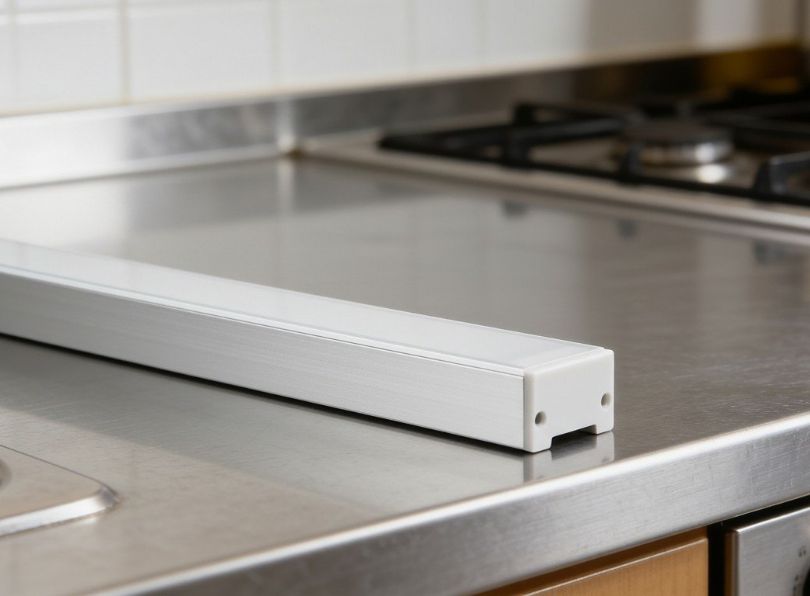
Lightingline’s white creates a surface that absorbs light rather than reflects it, eliminating the plastic effect of glossy whites and adapting to a variety of situations. Let’s see which ones.
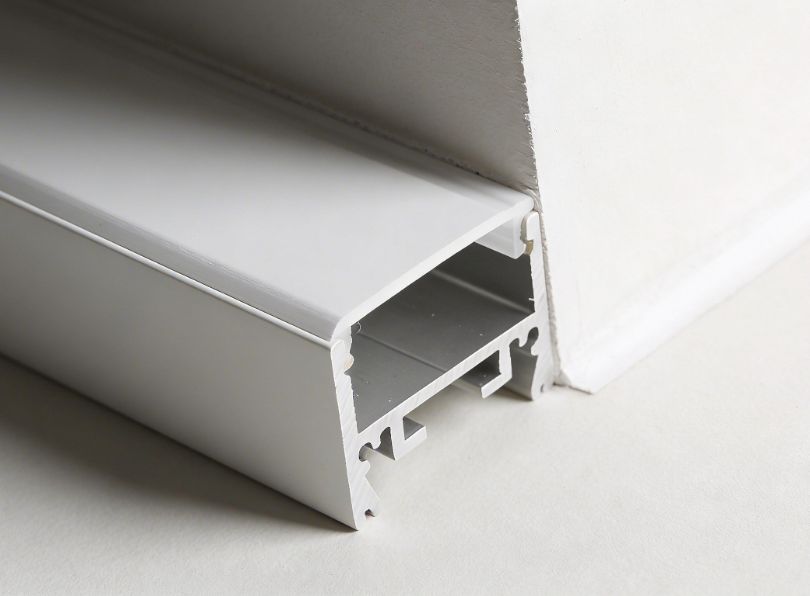
Drywall and plaster: the perfect match. In this case, there is no continuity of finish, but a harmonious luminosity. The profile is perceived as an integral part of the wall, not as a foreign body.
Carrara and statuario white marble: pure RAL 9016 is too cold, almost bluish. Our white restores the milky warmth of marble. The combination does not seek invisibility, but rather tonal harmony.
Natural oak and ash: white is the ideal companion for unstained woods. It integrates without overlapping. A white profile on bleached oak planks is now a classic of Nordic interior design.
Resins and microcement: White finishes are perfectly suitable, as long as the matte finish is maintained. Satin white on gray microcement creates a sharp, almost graphic contrast. Matte white on white resin creates a tone-on-tone layering.
Black: elegance, depth, and material contrast
Black: elegance, depth, and textural contrast
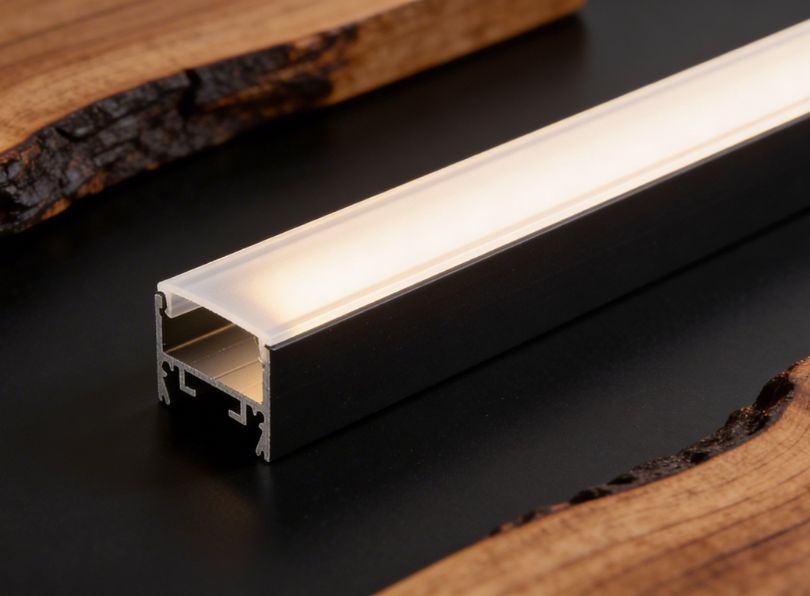
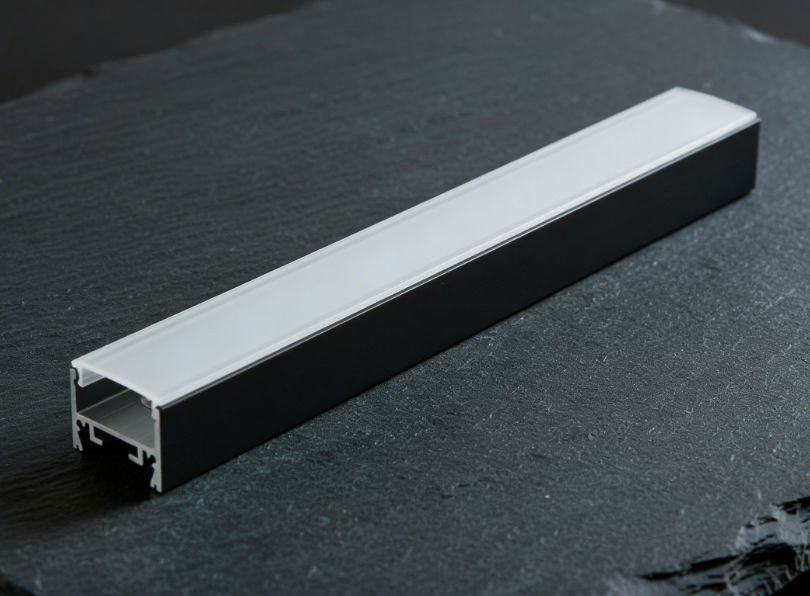
Lightingline’s black is neither velvet nor glossy. It’s a deep black with a controlled residual reflection, ideal for minimalist finishes.
Glass and mirrors: the perfect match. The black profile frames the transparent or reflective surface like a thin graphite line, achieving the height of minimalist elegance.
Basalt, slate, and dark stone: matte black aligns with the stone without attempting to imitate it. There’s no illusion of a stone profile, just the clarity of a metallic component that honors the stone material through its difference.
Black stainless steel: a perfect match, creating a striking surface tension.
Exposed concrete: here, black plays a clever game: instead of providing continuity to the gray concrete, it frames it. A black profile on a concrete wall is a clear graphic sign that defines its boundaries in space.
Black finishes are not recommended on light natural woods (the contrast is too strong as the black cuts through the grain) and near raw aluminum (silver appears more natural).
Wood: pairing the three finishes with wooden surfaces
Lightinline does not produce profiles with faux grain because the three basic colors, when properly combined, enhance the wood better than any imitation.
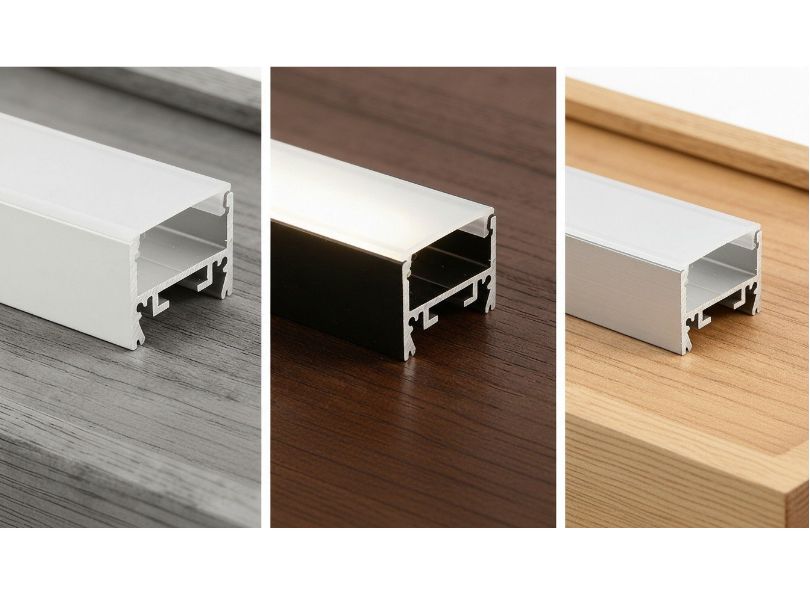
Anodized silver + natural oak / bleached oak: for a contemporary style. The cool silver of the profile and the warm beige of the wood create a harmonious balance; this combination works on both vertical and horizontal slats.
Matte white + gray-stained ash / maple: the white complements the gray of the wood without clashing. On very light woods, it almost disappears, while on medium-intensity woods, it creates a luminous break.
Matte black + aanaletto walnut / burned oak: the black enhances the depth of the dark brown. A black profile on Canaletto walnut doesn’t try to be wood, but rather to be a decoration embedded in the wood. It should be remembered, however, that this type of finish requires visual distance.
Black finishes are not recommended on natural oak because they create too much contrast, and silver finishes on walnut because the cold grey on a warm brown does not blend harmoniously.
Floors and windows: which finishes should you choose?
Wood floors: for recessed floor profiles, matte white finishes are the safest choice with oak and larch. Anodized silver is suitable for industrial concrete or resin floors, where it interacts with the inert grain size. Black is perfect for slate- or slate-effect porcelain stoneware floors.
Metal windows and doors: if the window frame is made of raw aluminum or steel, choose silver. If the frame is painted white, choose white. If the frame is black, choose black. The interaction between the frame and the LED profile is now one of the most photographed details in interior design magazines.
Compatibility table: three colors, all materials
Table 1 — Recommended pairings for the three Lightinline finishes.
| Material / surface | Anodized silver | Matte white | Matte black |
|---|---|---|---|
| Brushed stainless steel | ✓ Ideal | ✗ Not recommended | ▲ Strong contrast |
| Copper / brass | ✓ By contrast | ✗ Not recommended | ✓ Elegant |
| Corten | ✗ Not recommended | ✗ Not recommended | ✓ Ideal |
| Drywall / plaster | ▲ Technical look | ✓ Perfect | ▲ Sharp contrast |
| White marble / travertine | ✗ Cold | ✓ Warm (special) | ▲ Graphic |
| Black marble / slate | ✗ Not recommended | ✗ Not recommended | ✓ Ideal |
| Natural oak | ✓ Contemporary | ✓ Nordic | ✗ Too much contrast |
| Canaletto walnut | ▲ Dull | ▲ Not incisive | ✓ Luxurious |
| Cement / microcement | ✓ Industrial | ▲ Essential | ✓ Brutalist |
| Glass / mirror | ▲ Reflective | ✓ Clean | ✓ Iconic |
| Raw aluminum | ✓ Unison | ✗ Not recommended | ✗ Not recommended |
Note: “Ideal” indicates a consolidated aesthetic synergy. “By contrast” indicates a deliberate and balanced contrast. “Not recommended” signals a risk of chromatic disharmony or conflict of visual temperatures.
Trends 2025-2026: the era of chromatic reduction in finishes
Analysis of projects published between 2025 and 2026 on platforms such as ArchDaily, Dezeen, and Domus shows a clear trend: the reduction of the chromatic vocabulary.Not dozens of finishes for dozens of materials, but a few strategic finishes applied consistently.
The term continuity is gradually being replaced by coherence. The profile is no longer expected to imitate wood or marble, but rather to be genuinely metal and to harmoniously dialogue with stone or wood.
The WELL and Fitwel certifications reward environments with low visual fatigue. Matte white (gloss <10%) and matte black absorb ambient light instead of reflecting it, reducing visual noise, while anodized silver, with its diffuse reflection, distributes light without glare.
Lightinline has chosen simplicity: three colors for a catalog that still allow for infinite combinations.
Finishes: three colors, one material, no compromises
Today’s architecture is inundated with hundreds of finishes, thousands of RAL codes, and endless samples. Lightingline rejects this logic not because multiple finishes can’t be produced, but because it’s impossible to pretend a covered profile is marble, oak, or rusty iron when it isn’t.
The industry spent twenty years teaching architects to hide profiles, painting them white, burying them in plaster, or wrapping them in a film that mimics wood grain, thus conveying the impression that the profile was aesthetically unappealing. Today, this is no longer the case: the profile doesn’t need to disappear, it simply needs to be carefully positioned.
More choices don’t always produce better architecture; sometimes they create greater confusion and difficulty in choosing. That’s why Lightingline offers silver, white, and black aluminum. Three colors for a single material: true minimalism.