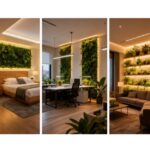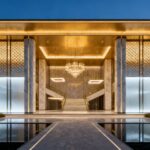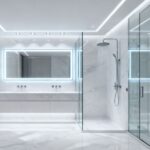
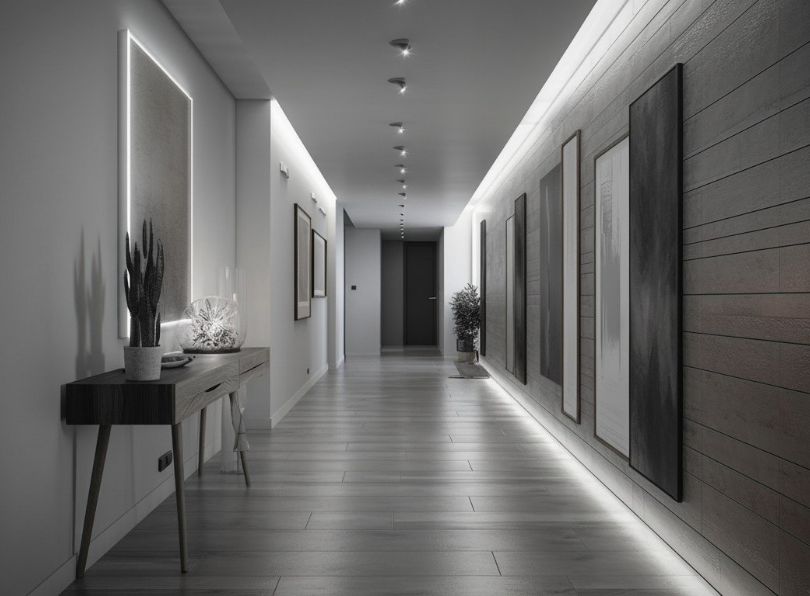
In cutting-edge architectural lighting, architectural LED profiles determine the qualitative difference that lies not solely in the light source itself, but in the sophisticated interaction between LED technology and its architectural housing. LED profiles transcend their mere mechanical support function to assume the role of integral design components, defining photometric quality, spatial light distribution, and aesthetic character—transforming luminous flux into a true structural and constitutive element of built space.
In this article…
Architectural led profiles: the convergence of technology and architecture
The contemporary evolution of lighting design demands deep knowledge of these devices—their engineering performance and the trends redefining paradigms in high-end interior and exterior design.
In today’s lighting landscape, the boundary between technical component and architectural element progressively dissolves. LED profiles embody this convergence: no longer simple housings for LED strips, but complex modular systems that mediate the relationship among technology, space, and human perception.
Their design engages multiple disciplines—from thermal engineering to applied optics, from materials science to industrial design—culminating in solutions that meet rigorous performance requirements without compromising the formal integrity of the architectural project.
Thus, selecting and specifying architectural LED profiles constitutes a primary design act, comparable to choosing a finish material or a construction system. This technical deep dive aims to analyze in detail the types, materials, evolutionary trends, and selection methodologies for these components, providing designers with a comprehensive and up-to-date understanding of the possibilities offered by the high-end market.
Types of architectural led profiles
The contemporary range of architectural profiles represents a sophisticated technological ecosystem, capable of addressing every design requirement with engineered solutions. Below is an exhaustive overview of the most advanced profile types, with particular attention to their structural characteristics, performance, and distinctive applications within architectural design.
DRYWALL INTEGRATION PROFILE
Precision-extruded aluminum
Invisible integration into suspended ceilings and partitions
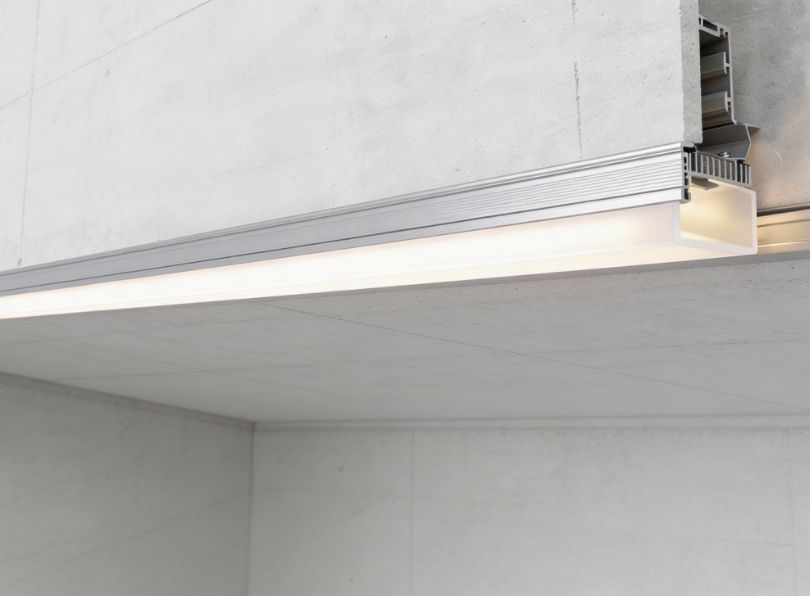
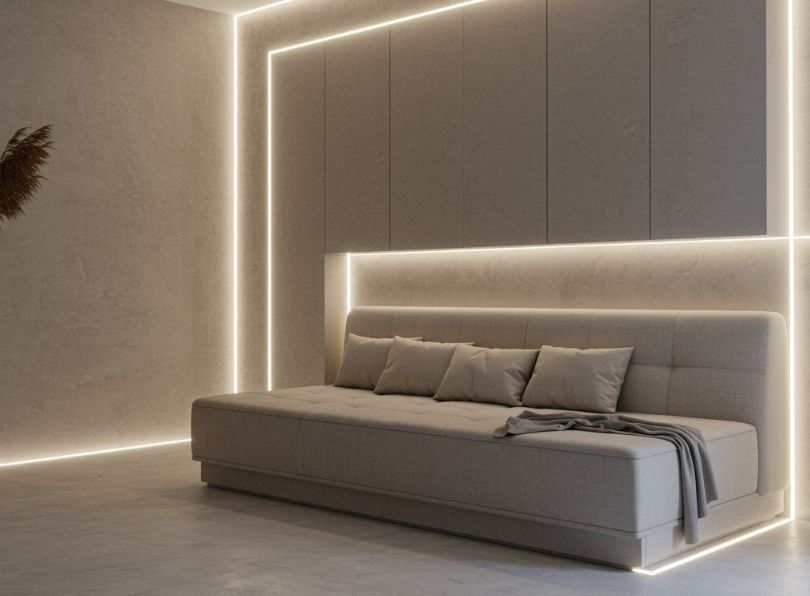
These profiles represent the pinnacle of minimalist integration. Designed with dimensional tolerances in the order of tenths of a millimeter, they feature optimized mounting flanges for seamless interface with drywall systems. Their defining feature is the visible edge geometry, often reduced to just 2–3 mm, minimizing visual impact once installed.
The cross-section is typically engineered to accommodate not only the LED strip but also necessary driver circuits, connectors, and in some cases, additional passive cooling systems. Installation involves a pre-positioning and anchoring phase to the structural substrate, followed by closure with drywall panels that abut the profile, leaving only the luminous emission slot visible.
These systems are essential for creating continuous, uninterrupted indirect light bands that define perimeters, emphasize volumes, or generate planar suspension effects. Advanced versions include micrometric tilt adjustment mechanisms (up to 30°) and snap-fit mounting systems that eliminate visible screws.
STRUCTURAL FLOOR-MOUNTED PROFILE
High-strength reinforced aluminum
Pedestrian and perceptual luminous lines
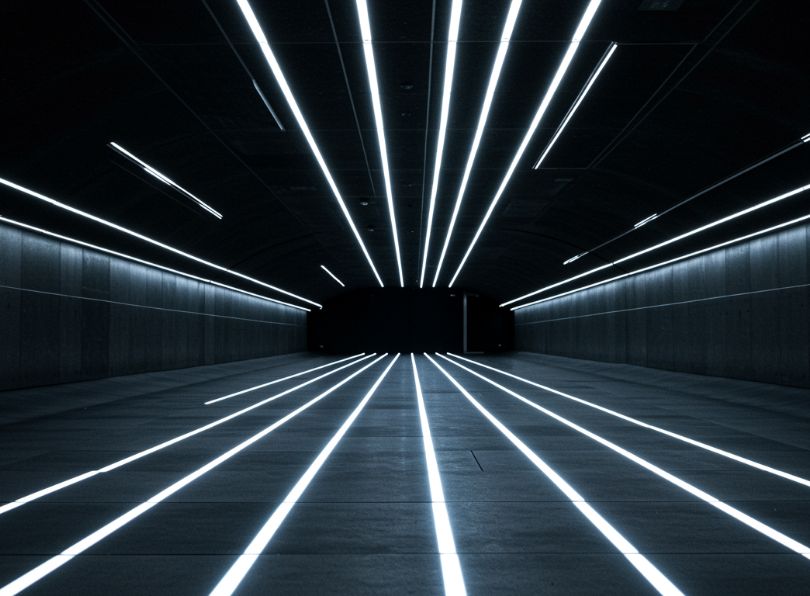
Built to withstand extreme mechanical stresses (point loads up to 500 kg, continuous foot traffic, impacts), these profiles are true structural elements for walking surfaces. Their construction is robust, with wall thicknesses exceeding 4 mm.
The diffuser is invariably made of impact-resistant thermoplastic polycarbonate, often laminated or tempered, offering high resistance to deformation and surface abrasion. The IP rating typically reaches IP67 or higher, ensuring complete waterproofing and protection against fine dust ingress.
Installation requires precise recessing into the screed with dedicated anchoring supports. Beyond museum pathways or safety lighting, they find application in complex scenarios such as pool perimeter lighting, visual signaling in industrial environments, and tactile-visual guidance in public spaces. Sophisticated models integrate low-temperature heating to prevent ice formation outdoors or incorporate water drainage systems.
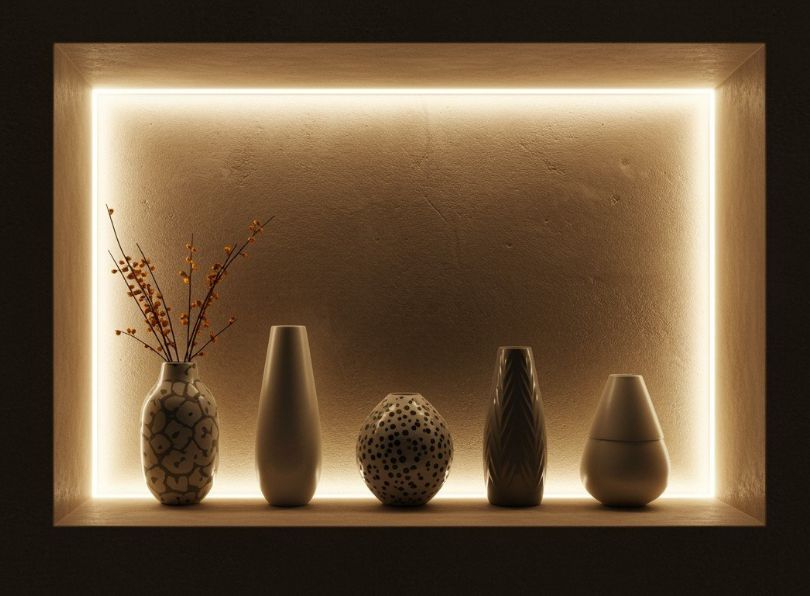
CNC-machined and molded aluminum
Accent lighting and texture enhancement
Specifically designed for installation in internal corners of custom furniture, bookshelves, architectural niches, or along wall-ceiling/floor intersections, these profiles maximize grazing light effects. Their precise angular geometry (not only 90°, but also 45°, 135°, or custom angles) allows optimal positioning of the LED source relative to the surface to be highlighted, emphasizing micro-textures, material irregularities, and creating dramatic shadow play.
The internal finish is often reflective (specular matte white or coated with reflective polymer film) to maximize light extraction efficiency. Asymmetric versions are available, directing luminous flux predominantly upward or downward for fine directional control.
Ideal applications include museums (painting illumination), retail (product highlighting), and luxury residential interiors to accentuate stone, wood, or strongly veined surfaces.
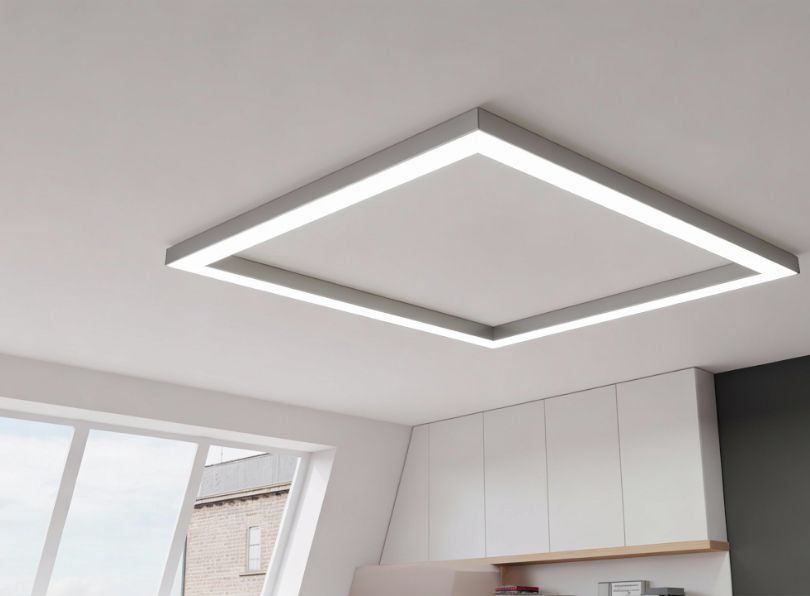
Aluminum with premium architectural finishes
Autonomous design element
In stark contrast to the philosophy of invisible integration, this category of profiles is designed to be showcased as an autonomous aesthetic element. Not intended for recessing, it becomes a primary architectural detail in its own right. Available in a wide repertoire of surface finishes beyond standard RAL coatings: colored anodization (white, black, silver), satin or controlled-grain brushed finishes, metallized films, mirror or hammered textures.
Shapes can be highly articulated, with C-, U-, L-, or box-shaped sections, often featuring slender proportions. Installation is achieved via carefully designed visible mounting systems, such as satin steel brackets or concealed magnets.
They are used in retrofit projects, industrial-chic environments, and commercial spaces where the technical language of installations is celebrated, or where flexibility and non-invasive installation are priorities. Some models function as multifunctional rail systems, integrating not only lighting but also display supports or cable management.
Material comparison: from thermal engineering to aesthetic expression
The choice of profile material is a critical decision that profoundly influences thermodynamic performance, operational lifespan of the LED system, mechanical strength, and, not least, the final aesthetic expression of the project. The following table provides an in-depth analysis of predominant materials, while the subsequent paragraph explores the frontiers of advanced composites.
| Material and process | Strengths and technical characteristics | Ideal design scenario | Aesthetic and perceptual impact |
|---|---|---|---|
| Extruded aluminum (High-precision extrusion) | Optimal thermal dissipation: thermal conductivity ~200 W/(m·K). Complex geometries (internal fins, multiple chambers) maximize heat exchange surface. Strength-to-weight ratio: high elastic modulus (70 GPa) enables long unsupported spans without deformation. Unlimited durability: inherent corrosion resistance (passive oxide layer). Finish versatility: hard anodization (10–25 µm thickness), electrostatic powder coating, mechanical finishes (brushing, polishing). 100% recyclable: reduced environmental impact in life-cycle perspective. | High-end and contract projects with high-power LED strips (>20W/m). Environments with high operating temperatures or poor air circulation. Floor, stair, and outdoor applications (with suitable finishes). Installations requiring long continuous runs without visible joints. | Technical-premium look: associated with precision and quality. Defined lines, sharp edges, sense of solidity. Anodized finishes offer superior chromatic depth and scratch resistance compared to paints. Perceived as “cool,” technical, yet refined. |
| Die-cast aluminum (Die-casting in mold) | Maximum robustness and impact resistance: fine-grained structure with no welds. Form freedom: enables complex, hollow, undercut geometries impossible with extrusion. Excellent heat dissipation: massive section provides high thermal inertia. Surface ready for finishing: minimal post-processing required. | Outdoor profiles exposed to environmental stress (hail, vandalism). Urban and facade architectural lighting. Integrated urban furniture components. Heavy industrial or marine environments (with specific protections). | Sculptural and solid aesthetic: perceived as monolithic and permanent. Organic, rounded forms are easily achievable. Ideal for creating strong, recognizable “design statements.” Often used for luminaires that double as architectural landmarks. |
| Reinforced polycarbonate (for diffusers) (Extrusion or molding) | Extreme impact resistance: impact toughness up to 850 J/m (vs. 3–4 for glass). Superior optical clarity: transmittance >90% with very low birefringence. UV stability: grades with specific additives prevent yellowing. Lightweight: density ~1.2 g/cm³. Excellent dielectric properties. | Diffusers for stairs, balconies, high-traffic public areas (safety). Floor or wall applications with high risk of impact. Environments requiring electrical insulation. Where exceptionally uniform, pattern-free light diffusion is needed. | The material “disappears”: attention is drawn solely to the emitted light, not the container. Soft, enveloping, granular-free light effect. Perceived as modern, technological, yet safe and reassuring. Typically smooth, easy-to-clean surface. |
| Stainless steel (AISI 304/316) (CNC machining, bending) | Exceptional mechanical strength: tensile strength up to 700 MPa. Total corrosion resistance: ideal for marine, chemical, or high-humidity environments. Premium finishes: satin, mirror, brushed, bead-blasted. Perceived as a luxury, permanent material. | Healthcare, laboratories, food industry (easy sanitization). Coastal or poolside projects. Luxury interiors seeking a “cool,” prestigious metallic finish. High-impact architectural detailing. | Surgical and luxury aesthetic: associated with cleanliness, hygiene, and high value. Mirror finishes create dynamic light reflections. Perceived heaviness and solidity. Timeless, contemporary look. |
The most advanced trend in the sector involves experimentation with and adoption of composite materials and special alloys. Notable examples include:
Aluminum-graphite composites: used to create thermally conductive inserts within standard aluminum profiles, multiplying heat transfer capacity from the LED chip to the frame, enabling smaller profile dimensions while maintaining high performance.
Technical ceramics: employed for high-precision insulating components within profiles, offering excellent thermal and dielectric resistance.
Fiber- or ceramic-filled polymers: for lightweight profile bodies with active thermal dissipation when current flows (controlled Peltier effect).
Innovative surface finishes: beyond hammered or mirror textures, photocatalytic finishes (decomposing dirt under light), nanostructured hydrophobic coatings (lotus effect), and thermochromic finishes that subtly shift hue based on profile temperature—serving as a visual indicator of system thermal status.
Trends in LED profile systems
The architectural LED profile sector is in rapid evolution, driven by technological innovation and rising aesthetic-functional expectations from designers and clients alike. Macro-trends point toward a future where the profile becomes an integrated, intelligent, and hyper-customizable system.
1. Extreme minimalism and ultra-thin critical lines
The push toward technical invisibility remains unstoppable. Demand for profiles with visible edges under 3 mm (down to 0.8 mm in extreme solutions) is now standard in high-end residential and commercial projects. The engineering challenge is monumental: maintaining adequate thermal dissipation for 15–18W/m strips within a minimal metal volume, ensuring structural rigidity against installation stresses and thermal expansion, and enabling easy insertion of LED strips and diffusers. Solutions include:
CFD-optimized internal geometries: computational fluid dynamics design of air chambers and fins to maximize natural convection.
Hybrid materials: copper or ultra-high-conductivity composite inserts at critical LED chip contact points.
Nanometric fastening systems: micro spring clips or structural adhesives eliminating visible mounting holes.
2. Architectural “plug & play” and prefabricated systems
Reducing on-site time and costs is imperative. Pre-wired modular systems are becoming standard for large-scale commercial and contract applications. These systems include:
Factory-assembled profiles with pre-installed and pre-wired LED strips, cut to exact lengths.
Rapid-insert IP-rated connectors enabling series connection of modules up to 20 meters without soldering or tape joints.
Modular drivers and controllers that plug directly into the profile system via robust proprietary connectors.
Complete kits including profile, LED, diffuser, end caps, power supply, and mounting accessories, tailored for specific applications (steps, shelving, coving). This approach ensures consistent quality, reduces on-site errors, and simplifies maintenance.
3. Advanced customization and bespoke solutions
Standardization coexists with growing demand for unique solutions. For iconic or complex restoration projects, customization is no longer optional but essential. Some manufacturers offer services including:
Precision cutting and machining of standard profiles to achieve non-catalog lengths or custom angles (even non-90°).
Custom extrusions: creation of dies for fully bespoke cross-sections, for significant production volumes.
The rise of the “smart profile”: electronics integration
The most advanced frontier is the convergence of mechanical housing and distributed intelligence. The “smart profile” is not merely a container but an integrated electromechanical system that includes:
High-density, high-performance LED sources (CRI >95, Tuneable White, RGBW, or even dynamic spectrum).
Constant-current drivers embedded directly within the profile, often one per module, powered by safety extra-low voltage (24–48V DC).
Integrated microcontrollers and sensors: PIR occupancy sensors, daylight sensors, internal temperature monitoring, and even simple voice-command microphones.
Embedded communication protocols: DALI-2, DMX, Zigbee, Bluetooth Mesh, or PoE (Power over Ethernet) circuits integrated directly into the profile PCB, turning it into an active node in an IoT lighting network.
Consolidated power delivery: ability to power entire runs (up to 100m) with a single data-and-power cable, drastically simplifying infrastructure wiring.
These “all-in-one” systems enable dynamic, granular, and adaptive lighting control: every linear meter of light can be independently adjusted for intensity, color, and CCT, responding to human presence, daylight, or pre-programmed scenes. This approach not only reduces installation complexity (fewer control units, less cabling) but also enables new forms of bio-adaptive interaction between architectural space and its occupants—merging lighting, building automation, and user experience into a single elegant, discreet component.
Guide to selecting architectural led profiles
Specifying the correct profile is a multidimensional analytical process that goes far beyond simple dimensional verification. Following a structured methodology is essential to ensure optimal performance, longevity, and an aesthetic outcome aligned with the design vision.
1. Thermodynamic analysis and led source matching
Thermal management is the dominant factor in LED lifespan. An empirical rule states that for every 10°C reduction in LED junction temperature (Tj), its useful life doubles. Therefore, the profile must be selected based on the power dissipated per linear meter (W/m) of the chosen LED strip.
Low Power (< 10 W/m): lightweight extruded aluminum profiles, even without complex internal fins. Wall thicknesses can be minimal (0.8–1mm). Suitable for ambient or accent lighting.
Medium Power (10 – 18 W/m): require profiles with optimized heat-dissipating sections. Internal fins or convection chambers are typical. Recommended wall thickness: 1.2–1.5mm. Most common for general linear lighting.
High Power (18 – 30+ W/m): demand dedicated high-power profiles. Typical features: dual chambers separating electronics and thermal zones, massive thermal base (thickness >2mm), compatibility with thermal tapes or silicone paste for improved heat transfer. For extreme power, profiles with external finned heatsinks or passive liquid cooling channels (heat pipes) exist.
Thermal calculations should always reference manufacturer data, typically expressed as junction-to-ambient thermal resistance (Rth j-a) for the complete system (LED + PCB + profile).
2. Applied optics: selecting the light control system
The choice of diffuser (or secondary optic) is crucial for emitted light quality and glare control (UGR). There is no universal solution.
| Diffuser/Optic type | Composition and structure | Photometric characteristics | Ideal application | Critical considerations |
|---|---|---|---|---|
| Standard opal | PMMA (Acrylic) or PC opacified with diffusing pigments. | Wide diffusion (120–140°). Eliminates LED dots. Efficiency loss: 15–25%. Very good uniformity. | General lighting in lived-in spaces (residential, hotels, restaurants). Where uniformity outweighs efficiency. | May show slight “grid effect” or “hot spots” if LEDs are too sparse or too powerful. Scratch-sensitive. |
| Micro-prismatic / Lenticular | PMMA molded with micro-lenses or prisms (typically 30–70 prisms/inch). | Precise beam control (e.g., 30°x60°, 60°x60°). Drastically reduces direct glare (low UGR). High efficiency (loss: 5–12%). | Applications above eye level (indirect ceiling lighting, shelving), offices, museums (object light control). | May create visible light patterns on nearby surfaces. Directionality must be precisely aligned during installation. |
| Extra-diffusing (Nano-diffuser) | PMMA layers with diffusing nanoparticles or microstructured surfaces. | Nearly perfect Lambertian diffusion (180°). Completely eliminates any dot or pattern. Higher efficiency loss (25–35%). | Where absolute homogeneity and zero granularity are required (luxury retail, contemporary art galleries, spas). | Higher cost. Requires ultra-high-density LED sources (≥240 LED/m) for optimal results. |
| Clear / Crystal | High-purity optical-grade PMMA or PC. | Maximum efficiency (loss <5%). Individual LEDs and PCB structure are fully visible. Beam angle defined by primary LED optics. | Decorative “glitter” effects, high-ceiling installations (>4m) where granularity isn’t perceived, displays, or tech-showcase applications. | Potentially high glare. Unsuitable for prolonged direct viewing in occupied spaces. |
| Blurred line-of-sight (Frosted slot) | Opal diffuser with a central transparent or microprismatic band. | Creates a sharp, bright central light line that fades laterally. Dramatic, architectural effect. | Pathway emphasis (corridors, stairs), architectural contour definition, theatrical or entertainment environments. | Very stylized effect. Use sparingly outside residential contexts. |
3. Ingress protection (IP) rating and environmental compatibility
The IP rating (e.g., IP20, IP54, IP65, IP67, IP68) defines protection levels against solids and liquids. Selection is dictated by the installation environment.
IP20 (no protection): for dry, clean interiors only. Most drywall profiles fall into this category.
IP54 (dust and splash resistant): suitable for kitchens, bathrooms (not direct water jets), and some covered outdoor areas. Features silicone gaskets at joints.
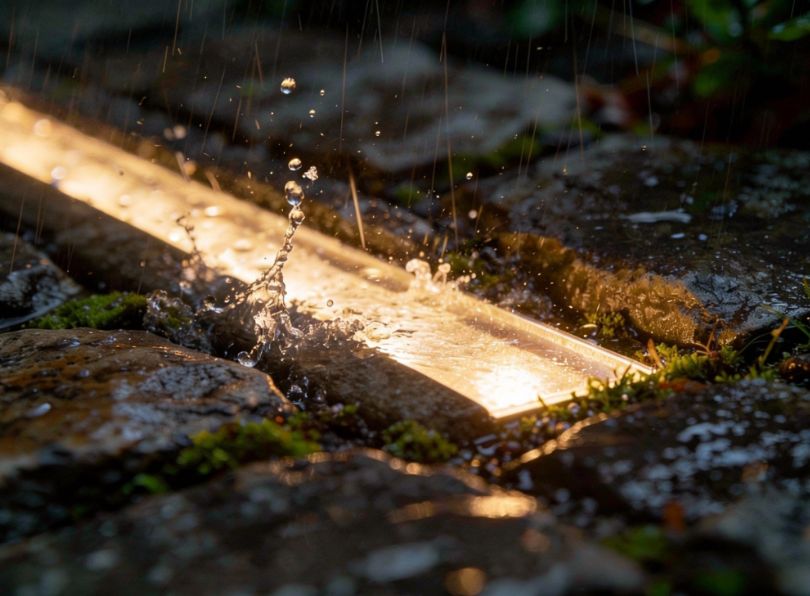
IP65 (water jet resistant): standard for outdoor use (facades, walkways, steps). Waterproof against rain and water jets from any direction. Diffuser sealed to profile with continuous gasket.
IP67/68 (immersion rated): for fountains, pools, fully submerged or high-pressure water applications. Extremely robust construction, often with stainless steel screws and double gaskets.
Beyond IP, outdoor applications require:
UV resistance: all polymer components (diffusers, gaskets) must be UV-stabilized.
Corrosion resistance: hard-anodized aluminum or AISI 316 stainless steel for marine environments.
Thermal cycling resistance: system must withstand extreme temperature swings (–20°C to +50°C) without deformation or seal failure.
4. Installation and maintenance considerations
A well-designed profile is also easy to install and maintain.
Mounting systems: prefer clip- or snap-based systems that avoid visible screws. Verify compatibility with substrates (drywall, wood, concrete).
Accessibility: for ceiling or high-level installations, ensure the diffuser can be removed without disassembling the entire profile.
Joints and corners: use matching manufacturer-supplied connectors, internal/external corners, and crosses to guarantee aesthetic and functional continuity.
Wiring and connections: allow adequate space in the installation cavity for junction boxes, power supplies, and cable slack. Use manufacturer-approved connectors.
Architectural led profiles: the primary support of light
Ultimately, the final selection of architectural LED profiles represents the synthesis of a rigorous analytical process that balances thermal physics, applied optics, materials engineering, and aesthetic expression. It is not the final detail of lighting design—but its material and conceptual foundation: the element that transforms a luminous idea into tangible, enduring architecture.
In the era of digital and adaptive lighting, the profile ceases to be a mere container and becomes the physical substrate upon which the luminous experience is built. Its selection determines not only the technical performance and longevity of the installation, but also defines the very character of the illuminated space—its relationship with users and its capacity to adapt to the evolving needs of contemporary life.
Architectural led profiles: elevate your design to integrated systems
Explore a complete range of architectural LED profiles engineered to meet the most advanced technical and aesthetic demands. Access modular and customizable solutions, detailed technical datasheets with certified photometric and thermal data, and consultative support from lighting engineers and architectural integration specialists for your next iconic project.
Transform light from a mere illuminant into a structural, expressive, and intelligent element of contemporary architecture.
Lighting Line UAB
V. Nageviciaus str. 3, 08237 Vilnius (LT)
Phone +370 5 2559408
VAT payer’s code LT100010316810
www.lightingline.eu