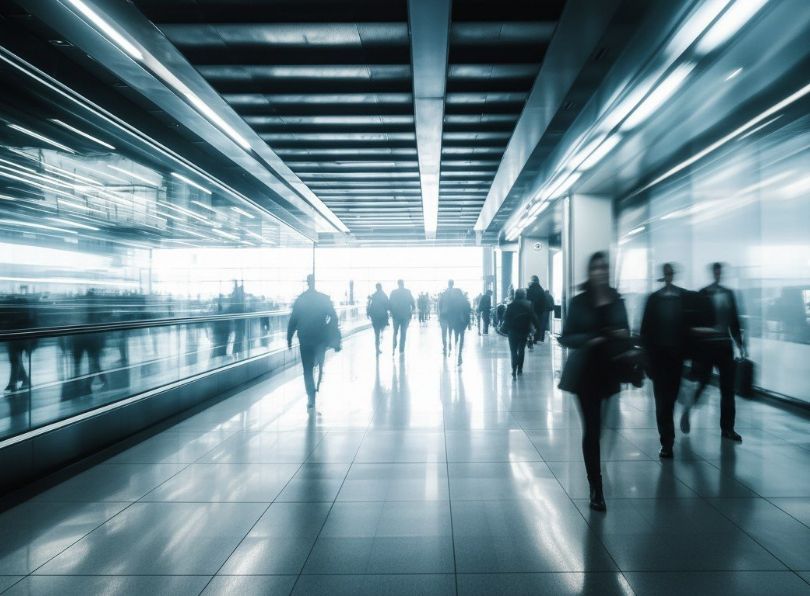
In modern architectural lighting design, particularly within high-traffic and dynamic-load environments, the integrity and longevity of linear LED lighting systems are paramount. This comprehensive engineering guide addresses the critical challenges of vibration, mechanical stress, thermal expansion, and material compatibility that architects, designers, and construction firms face when specifying aluminum profile systems for demanding applications.
Focusing on robust anti-vibration lighting supports and dynamic load lighting systems, we explore the engineering principles, material science, and installation methodologies that ensure reliable performance in settings ranging from bustling airport terminals to subterranean parking garages. Through detailed analysis of vibration damping aluminum extrusion systems and corrosion-resistant mounting solutions, this article provides the technical foundation necessary for designing lighting installations that withstand the test of time and constant use.
In this article…
- Understanding vibration dynamics in architectural environments
- Aluminum profile engineering: material properties and structural integrity
- Anti-vibration mounting solutions: principles and applications
- Material compatibility and corrosion prevention strategies
- Thermal management and expansion compensation
- Design considerations for specific high-traffic applications
- Testing standards and performance validation
- Installation best practices and retrofit methodologies
- Future trends and advanced solutions
- Specification guidelines for vibration-resistant mounting solutions
Understanding vibration dynamics in architectural environments
The effective design of vibration resistant lighting systems begins with a fundamental understanding of vibration sources, transmission paths, and their effects on aluminum extruded profiles. In high-traffic environments, vibrations originate from multiple sources including pedestrian movement, vehicular traffic, mechanical equipment, and even structural resonance.
These vibrational forces, when transmitted to aluminum LED profiles, can lead to premature failure through material fatigue, fastener loosening, optical misalignment, and electrical connection degradation. This section explores the physics of vibration in built environments and establishes the foundation for designing effective anti-vibration lighting supports.
Sources of vibration in high-traffic areas
Vibrational energy in architectural spaces manifests through both predictable cyclic loads and random impulse events. Pedestrian traffic vibration lighting mounts must accommodate the rhythmic loading patterns created by footfalls, which typically range from 1.6 to 2.4 Hz for walking and 2.5 to 3.5 Hz for running. In contrast, vehicular traffic in parking garages and loading docks generates higher frequency vibrations (5-30 Hz) with significantly greater amplitude.
Mechanical equipment such as HVAC systems, escalators, and rolling security gates introduce continuous vibration spectra that can excite the natural resonance frequencies of aluminum profile systems. Understanding these source characteristics is essential for specifying appropriate vibration damping aluminum extrusion systems.
Frequency analysis and resonance considerations
The most critical factor in vibration-resistant design is avoiding resonance, where the excitation frequency matches the natural frequency of the aluminum profile system. When this occurs, even small vibrational inputs can be amplified dramatically, leading to catastrophic failure. How to calculate resonance frequency aluminum LED profile systems involves considering multiple factors including profile geometry, mounting spacing, material properties, and attached masses.
For standard 6063-T5 aluminum extrusions commonly used in linear lighting, the fundamental resonance frequency for simply supported spans typically falls between 15-45 Hz depending on profile dimensions and span length. This range unfortunately overlaps with many common vibration sources in built environments, necessitating careful design intervention through anti-vibration linear LED profile supports.
| Vibration source | Frequency range (Hz) | Typical acceleration (m/s²) | Primary effect on aluminum profiles | Recommended mounting solution |
|---|---|---|---|---|
| Pedestrian foot traffic | 1.6 – 3.5 | 0.05 – 0.2 | Low-cycle fatigue, fastener loosening | Elastomeric mounts with vertical damping |
| Vehicular traffic (cars) | 5 – 15 | 0.2 – 1.5 | Bending stress, connection fatigue | Spring suspended systems with lateral restraint |
| Heavy vehicles/trucks | 2 – 8 | 1.0 – 3.0 | High-amplitude deflection, material yielding | Floating mount systems with isolation joints |
| Mechanical equipment (HVAC) | 10 – 30 | 0.1 – 0.8 | Resonant vibration, acoustic noise generation | Tuned mass dampers, rubber isolation mounts |
| Structural building motion | 0.1 – 10 | 0.01 – 0.1 | Quasi-static deformation, stress accumulation | Sliding connections with thermal/vibration breaks |
Vibration transmission pathways and isolation principles
Effective vibration control requires interrupting transmission pathways between vibration sources and aluminum lighting profiles. Vibration energy travels through structural elements via three primary mechanisms: structural-borne transmission through building elements, airborne transmission through acoustic pressure waves, and flanking transmission through secondary connections.
Anti-vibration lighting supports function by creating mechanical impedance mismatches that reflect vibrational energy back toward the source, dissipating energy through damping materials, or detuning the system to avoid resonant amplification. The selection between elastomeric mounts for aluminum profiles, spring suspended aluminum LED profiles, or floating mount system aluminum profiles depends on the frequency characteristics of the expected vibrations and the required degree of isolation.
Dynamic load analysis and fatigue considerations
Aluminum profile fatigue resistance vibration performance is fundamentally governed by the amplitude and number of stress cycles experienced during service life. The S-N curve (stress versus cycles to failure) for 6063-T5 aluminum shows that below a certain stress threshold (endurance limit), the material can theoretically withstand infinite cycles. However, in vibration environments, stress concentrations at mounting points, fastener holes, and profile joints can locally exceed this limit, initiating fatigue cracks.
What thickness aluminum profile resists vibration fatigue most effectively depends not only on the base material thickness but also on reinforcement strategies such as internal ribs, increased flange dimensions, and strategic placement of mounting points. Dynamic load lighting aluminum profiles must be engineered with fatigue life as a primary design criterion, often requiring finite element analysis (FEA) to identify and mitigate stress concentration areas.
Aluminum profile engineering: material properties and structural integrity
The selection of appropriate aluminum alloys, tempers, and profiles forms the foundation of any vibration-resistant lighting system. 6063-T5 aluminum extrusion vibration characteristics represent an optimal balance between formability, strength, and corrosion resistance for most architectural lighting applications.
This section examines the material science behind aluminum profiles for dynamic environments, addressing how alloy composition, heat treatment, extrusion design, and surface treatments contribute to vibration performance. Understanding these fundamental properties enables designers to specify profiles that not only meet aesthetic requirements but also withstand the mechanical demands of high-traffic installations.
6063-T5 aluminum alloy: properties and performance
The 6063 aluminum alloy, in the T5 temper condition, represents the industry standard for architectural lighting profiles due to its excellent combination of extrusion characteristics, mechanical properties, and anodizing response. With typical yield strength of 145 MPa and ultimate tensile strength of 185 MPa, this material provides sufficient structural capacity for most lighting applications while maintaining good ductility.
How to choose vibration mounts for 6063-T5 aluminum profiles requires understanding the material’s modulus of elasticity (68.9 GPa), which determines its stiffness and natural frequency characteristics. The alloy’s fatigue strength at 5×10⁸ cycles is approximately 55-70 MPa, establishing the baseline for aluminum profile fatigue resistance vibration design.
Extrusion design for vibration resistance
T-slot aluminum profile anti-vibration brackets and mounting systems leverage the geometric advantages of extruded aluminum to enhance vibration performance. The closed-box sections commonly used for LED channels provide superior torsional stiffness compared to open profiles, reducing susceptibility to resonant twisting modes.
Internal ribbing patterns, strategically placed within the extrusion die, increase the moment of inertia without significantly adding weight, thereby raising the natural frequency above common excitation ranges. Wall thickness distribution plays a critical role in vibration performance, with thicker sections at mounting points and stress concentration areas dramatically improving the dynamic load capacity of aluminum LED profiles.
| Profile feature | Design consideration | Vibration performance benefit | Manufacturing implication | Typical application |
|---|---|---|---|---|
| Wall thickness | Minimum 1.5-2.0mm at mounting points | Reduces local stress concentrations, increases stiffness | Higher material cost, potential for sink marks | High traffic area LED profile supports |
| Internal ribbing | Vertical ribs at 15-25mm spacing | Increases natural frequency, reduces panel vibration | Complex die design, potential for uneven extrusion | Airport terminal linear lighting vibration control |
| Corner radii | Minimum R1.0 internal, R0.5 external | Reduces stress concentration factors by 30-50% | Standard die practice, minimal cost impact | All vibration sensitive applications |
| T-slot geometry | ISO 9001 compliant slot dimensions | Ensures compatible mounting hardware engagement | Precision die machining required | T-slot aluminum profile anti-vibration brackets |
| Surface finish | Mill finish or precision anodized | Anodizing increases surface hardness and fatigue resistance | Additional processing step, cost increase | Anodized aluminum profile mounting solutions |
Structural analysis and load capacity calculations
Determining what is the dynamic load capacity of aluminum LED profiles requires comprehensive structural analysis that considers both static and dynamic loading scenarios. Static calculations based on Euler-Bernoulli beam theory provide the foundation, but must be modified to account for dynamic amplification factors that can increase effective loads by 1.5 to 3.0 times depending on vibration characteristics.
The maximum span for aluminum LED profiles in high traffic areas is typically governed by deflection limitations (L/180 to L/240 for visual comfort) rather than ultimate strength, making stiffness a more critical parameter than pure load capacity. Finite element analysis (FEA) modeling allows for precise determination of stress distributions under combined static and dynamic loading, identifying potential failure points before fabrication.
Fatigue life prediction and service factor determination
Predicting the lifespan of aluminum profiles with vibration mounts requires application of Miner’s rule for cumulative fatigue damage alongside vibration spectrum analysis. Each stress cycle at a given amplitude contributes to progressive material damage, with the sum of these damage ratios determining eventual failure.
What vibration frequency damages aluminum LED channels most severely depends not only on the frequency itself but on its relationship to the profile’s natural frequencies and the presence of damping elements. High-cycle fatigue (above 10⁴ cycles) typically governs design for continuously vibrating environments, requiring conservative stress limits and regular inspection protocols for critical installations.
Anti-vibration mounting solutions: principles and applications
The interface between aluminum profiles and supporting structures represents the most critical element in vibration-resistant lighting systems. This section explores the complete spectrum of anti-vibration linear LED profile supports available for architectural applications, from simple elastomeric pads to sophisticated active damping systems.
Each mounting technology offers distinct advantages for specific vibration environments, frequency ranges, and installation constraints, requiring careful matching to project requirements. By understanding the operating principles, performance characteristics, and limitations of each mounting type, designers can create optimized systems that provide decades of reliable service in demanding environments.
Elastomeric mounting systems
Elastomeric mounts for aluminum profiles represent the most common and cost-effective solution for moderate vibration environments. These systems utilize the viscoelastic properties of rubber compounds to dissipate vibrational energy through hysteresis, converting mechanical energy into heat.
Are rubber mounts compatible with anodized aluminum surfaces requires careful consideration of compound formulation to prevent chemical interactions that could compromise either material. Natural rubber, EPDM, silicone, and neoprene each offer distinct performance characteristics in terms of damping efficiency, temperature range, UV resistance, and compatibility with aluminum surfaces.
Material selection and performance characteristics
What is the best vibration mount material for aluminum profiles depends on the specific environmental conditions, frequency spectrum, and amplitude of expected vibrations. Natural rubber provides excellent damping characteristics (tan δ ≈ 0.1-0.3) across a broad temperature range but suffers from ozone degradation and UV sensitivity. EPDM offers superior weather resistance and temperature range (-40°C to +150°C) with moderate damping.
Silicone maintains stable properties across extreme temperature ranges (-55°C to +200°C) with good UV resistance but lower damping efficiency. For applications requiring both vibration isolation and environmental sealing, EPDM gaskets aluminum profile mounts provide dual functionality, though their compression set characteristics must be considered for long-term performance.
| Elastomer type | Damping coefficient (tan δ) | Temperature range (°C) | Dynamic stiffness (N/mm) | Compression set (%) | Best application |
|---|---|---|---|---|---|
| Natural rubber | 0.10 – 0.30 | -30 to +70 | 5 – 20 | 15 – 25 | Indoor pedestrian areas with moderate vibration |
| EPDM | 0.05 – 0.15 | -40 to +150 | 8 – 25 | 20 – 30 | Outdoor applications, chemical exposure areas |
| Silicone | 0.02 – 0.10 | -55 to +200 | 3 – 15 | 10 – 20 | High temperature environments, food processing |
| Neoprene | 0.08 – 0.20 | -20 to +100 | 10 – 30 | 25 – 35 | Chemical resistance required, moderate damping |
| Polyurethane | 0.20 – 0.40 | -30 to +80 | 15 – 50 | 5 – 15 | High load applications, impact resistance |
Spring suspended and floating mount systems
Spring suspended aluminum LED profiles provide superior isolation for low-frequency, high-amplitude vibrations commonly encountered in parking garages and industrial settings. These systems decouple the aluminum profile from the supporting structure through helical springs or leaf springs that provide a low natural frequency (typically 2-8 Hz) below most excitation frequencies.
How to isolate vibrations in suspended aluminum lighting systems effectively requires careful calculation of spring rates, damping ratios, and travel limits to prevent bottoming out during extreme events. Floating mount system aluminum profiles take this concept further by incorporating multiple degrees of freedom and often including both vertical and horizontal isolation elements.
Design principles for spring isolation systems
The effectiveness of spring-based isolation systems depends on achieving a low natural frequency relative to the excitation frequency, with frequency ratios of 3:1 or greater providing excellent isolation efficiency. The natural frequency (fₙ) of a spring-mass system is determined by fₙ = (1/2π)√(k/m), where k is the spring stiffness and m is the supported mass.
For aluminum LED profiles with vibration mounts, the supported mass includes not only the profile itself but also LED modules, drivers, diffusers, and any accumulated debris or ice in exterior applications. Progressive spring rates or pre-compressed springs may be employed to accommodate variable loading conditions while maintaining consistent isolation performance.
Active and hybrid damping systems
For critical applications where vibration levels must be maintained below strict thresholds, active damping systems and hybrid passive-active solutions offer unprecedented control. These advanced anti-vibration lighting supports incorporate sensors, controllers, and actuators that detect vibration and apply counter-forces to cancel unwanted motion.
While more complex and expensive than passive systems, active damping can achieve 90-99% vibration reduction across broad frequency ranges, making them ideal for sensitive environments like museums, laboratories, or precision manufacturing facilities. Hybrid systems combine passive elastomeric or spring elements with active components to provide fail-safe operation and reduce energy consumption.
Material compatibility and corrosion prevention strategies
Galvanic corrosion represents one of the most significant threats to the long-term integrity of aluminum profile mounting systems in high-traffic environments. When aluminum comes into electrical contact with more noble metals in the presence of an electrolyte (moisture, condensation, or chemical solutions), rapid corrosion of the aluminum can occur.
This section provides comprehensive guidance on galvanic corrosion prevention aluminum vibration mounts through material selection, isolation techniques, and protective coatings. Understanding and addressing these compatibility issues is essential for ensuring the decades-long service life expected from modern architectural lighting installations.
Galvanic series and compatibility principles
The galvanic series ranks metals by their electrochemical potential in seawater, with more active (anodic) metals tending to corrode when electrically connected to more noble (cathodic) metals. Aluminum and its alloys occupy a moderately anodic position in the series, making them susceptible to corrosion when paired with stainless steel, brass, or copper without proper isolation.
How to prevent galvanic corrosion aluminum profile mounts effectively requires either eliminating the electrical connection between dissimilar metals, isolating them with dielectric materials, or selecting fastener materials that are close to aluminum in the galvanic series. The relative surface area of connected metals also significantly influences corrosion rates, with small anodic areas connected to large cathodic areas experiencing accelerated degradation.
Fastener selection and isolation techniques
What fasteners to use for aluminum vibration mounts depends on the specific environment, load requirements, and maintenance accessibility. For general applications, stainless steel screws with appropriate isolation provide a good balance of strength and corrosion resistance. Can stainless steel screws be used on aluminum profiles safely when proper isolation techniques are employed, including non-conductive washers, sleeves, and coatings that break the electrical connection between the two metals.
For maximum compatibility without isolation, aluminum or aluminum alloy fasteners provide ideal galvanic matching but may lack the strength for high-load applications. Brass fasteners aluminum vibration mounts offer a compromise with better galvanic compatibility than stainless steel but require evaluation of their strength limitations.
| Fastener material | Galvanic potential vs. aluminum | Relative corrosion risk | Tensile strength (MPa) | Isolation requirement | Recommended application |
|---|---|---|---|---|---|
| Aluminum 6061-T6 | 0 mV (same material) | None | 310 | None required | Light to moderate loads, non-structural |
| Stainless steel 304 | +250 to +400 mV | Moderate to high | 515 | Dielectric washers/sleeves essential | High strength requirements, indoor/outdoor |
| Brass (C36000) | +150 to +300 mV | Low to moderate | 380 | Recommended for wet environments | Moderate loads, aesthetic applications |
| Hot-dip galvanized steel | +100 to +200 mV | Low (zinc coating active) | 400 | Coating maintenance required | Temporary installations, cost-sensitive |
| Titanium grade 2 | +400 to +600 mV | Very high | 345 | Complete dielectric isolation essential | Marine environments, chemical exposure |
Protective coatings and surface treatments
Anodized aluminum profile mounting solutions provide enhanced corrosion resistance while maintaining the aesthetic qualities of aluminum. The anodizing process creates a hard, porous aluminum oxide layer that can be sealed to provide excellent barrier protection.
Are rubber mounts compatible with anodized aluminum surfaces generally depends on the rubber compound and any plasticizers or additives that might interact with the anodized layer. Hard anodizing (Type III) provides superior abrasion resistance but may be more brittle than standard anodizing (Type II), potentially affecting performance in applications with significant flexing or impact.
Gasket and sealant compatibility
Can silicone gaskets be used on anodized aluminum profiles safely when properly formulated silicone compounds are selected that do not contain acetic acid or other corrosive curing byproducts. Neutral-cure silicone sealants and EPDM gaskets generally provide the best compatibility with aluminum surfaces.
The selection of gasket materials must consider not only galvanic compatibility but also compression set characteristics, temperature range, UV resistance, and chemical compatibility with cleaning agents or environmental contaminants. For applications requiring both vibration isolation and environmental sealing, composite gaskets with multiple material layers may provide optimal performance.
Thermal management and expansion compensation
Thermal expansion and contraction present significant challenges for aluminum profile mounting systems, particularly in environments with wide temperature variations or uneven heating from LED sources. Aluminum has a relatively high coefficient of thermal expansion (23.1 × 10⁻⁶/°C for 6063 alloy), meaning a 10-meter profile expands approximately 23.1 mm over a 100°C temperature range.
This section examines how thermal expansion affects aluminum profile mounting and presents strategies for accommodating dimensional changes without inducing stress, distortion, or vibration sensitivity. Effective thermal management ensures that lighting systems maintain their optical alignment, mechanical integrity, and vibration resistance throughout daily and seasonal temperature cycles.
Thermal expansion calculations and accommodation
How much does aluminum expand with temperature changes depends on the specific alloy, temperature range, and constraint conditions. The linear expansion (ΔL) can be calculated using ΔL = α × L₀ × ΔT, where α is the coefficient of thermal expansion, L₀ is the initial length, and ΔT is the temperature change.
For aluminum LED profiles in exterior applications, temperature changes of 50-70°C between day and night or between seasons are common, resulting in significant dimensional changes that must be accommodated by the mounting system. Constrained expansion leads to thermal stress that can exceed the yield strength of aluminum or fasteners, causing permanent deformation or failure.
Expansion joint design and sliding mounts
Do floating mounts prevent aluminum profile stress cracking by allowing free thermal movement while maintaining vibration isolation. These systems incorporate low-friction bearing surfaces or flexible connections that permit longitudinal movement while restricting vertical and lateral motion.
The design of expansion joints must consider not only the maximum expected movement but also the rate of temperature change, which affects the speed at which expansion occurs and the resulting forces. For long continuous runs, expansion joints should be placed at regular intervals, typically 6-12 meters depending on the temperature range and profile cross-section.
| Profile length (m) | Temperature range (°C) | Total expansion (mm) | Recommended mounting spacing (m) | Expansion joint type | Movement capacity (mm) |
|---|---|---|---|---|---|
| 5 | 50 | 5.8 | 2.5 – 3.0 | Sliding T-slot brackets | ±10 |
| 10 | 60 | 13.9 | 3.0 – 4.0 | Floating mount with guides | ±15 |
| 15 | 70 | 24.3 | 4.0 – 5.0 | Center-fixed, ends free | ±20 |
| 20 | 80 | 37.0 | 5.0 – 6.0 | Multiple expansion joints | ±15 each |
| 30 | 90 | 62.4 | 6.0 – 8.0 | Modular sections with gaps | ±20 each |
Heat dissipation and vibration mount interactions
Do vibration mounts reduce heat dissipation aluminum profiles by creating thermal barriers between the profile and supporting structure. Aluminum profiles function as heat sinks for LED modules, conducting heat away from sensitive electronic components to the mounting surface and surrounding air.
Vibration isolation materials, particularly elastomers, typically have much lower thermal conductivity (0.1-0.5 W/m·K) compared to aluminum (200+ W/m·K), potentially creating thermal bottlenecks. This thermal consideration must be balanced against vibration requirements, potentially requiring specialized mounting solutions that provide both vibration isolation and thermal conduction pathways.
Thermally conductive isolation materials
Advanced composite materials incorporating thermally conductive fillers (aluminum oxide, boron nitride, or graphite) in elastomeric matrices can provide improved thermal transfer while maintaining vibration isolation properties. These specialized materials typically achieve thermal conductivities of 1-5 W/m·K, representing a 5-10x improvement over standard elastomers.
For high-power LED applications where thermal management is critical, thermally conductive pads or phase-change materials may be incorporated between the aluminum profile and vibration mounts to improve heat transfer without compromising vibration performance. The selection of such materials requires careful evaluation of their long-term stability, compression set characteristics, and compatibility with aluminum surfaces.
Design considerations for specific high-traffic applications
Different high-traffic environments present unique vibration challenges that require tailored solutions for aluminum profile lighting systems. This section examines specific application scenarios, from subway stations to airport terminals, providing detailed design guidance for each environment.
By understanding the characteristic vibration spectra, environmental conditions, and maintenance requirements of each application type, designers can create optimized systems that provide reliable performance throughout their service life. Case studies and best practices illustrate how theoretical principles translate to practical solutions in real-world installations.
Parking garage vibration resistant lighting
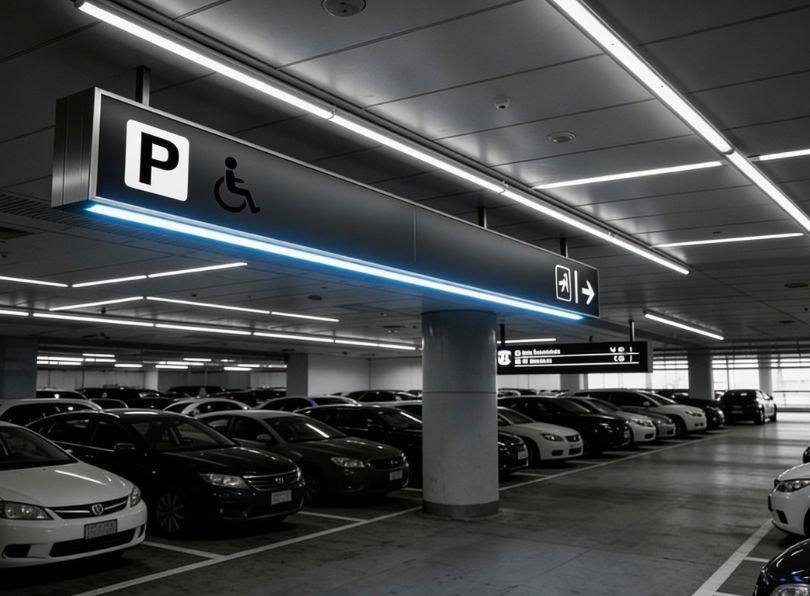
Parking garage environments present unique challenges with low-frequency, high-amplitude vibrations from vehicular traffic combined with potential impact loads from parking maneuvers. The concrete construction typical of parking structures provides a rigid mounting surface that efficiently transmits vibrations from vehicle movement directly to lighting fixtures.
Anti-vibration linear LED profile supports for parking applications must withstand not only continuous vibration but also occasional impact events, requiring robust design with adequate safety factors. Environmental considerations include temperature variations, potential chemical exposure from vehicle fluids, and in colder climates, de-icing salt corrosion.
Design guidelines for parking structures
What is the maximum span for aluminum LED profiles in high traffic areas like parking garages typically ranges from 1.5 to 3.0 meters depending on profile size and expected loads. Heavier profiles with thicker walls and internal reinforcement allow for greater spans but increase material cost and weight.
Mounting systems should incorporate both vertical vibration isolation and lateral restraint to prevent swinging or rotation from air movement from passing vehicles. For low-ceiling areas, impact protection through reinforced diffusers or protective cages may be necessary to prevent damage from vehicle contact.
Subway station aluminum profile mounting
Subway and underground railway environments represent extreme vibration conditions with very low frequency, high amplitude vibrations from train movement combined with aerodynamic pressure waves. The periodic nature of train arrivals and departures creates distinct vibration signatures that can excite specific resonance modes in aluminum profiles.
Vibration damping aluminum extrusion systems for subway applications must address frequencies as low as 1-5 Hz from train movement while also considering emergency scenarios such as brake screeching or track irregularities. Additional challenges include high humidity, potential water infiltration, and aggressive cleaning regimens that may affect mounting materials.
Specialized mounting solutions for railway environments
Spring suspended aluminum LED profiles with hydraulic or viscous dampers provide effective isolation for the low-frequency vibrations characteristic of railway environments. These systems typically incorporate progressive spring rates to accommodate varying vibration amplitudes while preventing bottoming out during extreme events.
Mounting points should be strategically located to avoid nodes of vibration modes, with additional intermediate supports potentially required for longer spans. All fasteners and mounting hardware should employ redundant locking mechanisms (double-nutting, lock washers, or thread-locking compounds) to prevent loosening under sustained vibration.
Airport terminal linear lighting vibration control
Airport terminal environments combine multiple vibration sources including foot traffic, baggage handling equipment, public transportation interfaces, and occasionally ground-transmitted vibrations from aircraft movement. The continuous operation and stringent safety requirements of airports demand lighting systems with exceptional reliability and minimal maintenance.
Anti-vibration lighting supports for airport applications must accommodate a broad frequency spectrum while maintaining aesthetic consistency across vast interior spaces. Additional considerations include emergency evacuation scenarios, security requirements, and compatibility with frequent cleaning and maintenance schedules.
Integrated design approaches for transportation hubs
Floating mount system aluminum profiles with multi-axis isolation provide comprehensive vibration control for the complex vibration environment of airport terminals. These systems often incorporate leveling adjustments to accommodate structural settlement or modification over time.
Modular design approaches allow for sections to be removed and replaced without disrupting adjacent lighting, facilitating maintenance in operational environments. All materials should be selected for fire safety compliance, with appropriate certifications for the specific application area (public corridors, boarding areas, security zones).
| Application environment | Primary vibration sources | Frequency range (Hz) | Key design considerations | Recommended mounting system | Special requirements |
|---|---|---|---|---|---|
| Parking garages | Vehicular traffic, impacts, structure-borne vibration | 2 – 20 | Impact resistance, chemical exposure, temperature cycling | Heavy-duty elastomeric mounts with lateral restraint | Corrosion protection, easy maintenance access |
| Subway/Rail stations | Train movement, aerodynamic pressure, crowd loading | 1 – 30 | Low-frequency isolation, high humidity, cleaning chemicals | Spring suspended systems with hydraulic damping | Redundant fastening, water resistance |
| Airport terminals | Foot traffic, equipment, aircraft vibration (distant) | 1.5 – 25 | Broad frequency isolation, aesthetics, maintenance access | Floating mounts with multi-axis isolation | Fire safety compliance, modular replacement |
| Shopping malls | Pedestrian traffic, entertainment systems, HVAC | 1.6 – 30 | Continuous operation, aesthetic flexibility, public safety | Adjustable elastomeric mounts with visual covers | Acoustic considerations, directional adjustability |
| Sports facilities | Crowd movement, entertainment systems, structural vibration | 1 – 15 | High amplitude events, crowd safety, quick maintenance | Heavy-duty floating systems with quick release | Impact resistance, emergency lighting integration |
Testing standards and performance validation
Validating the performance of vibration-resistant aluminum profile systems requires rigorous testing according to established international standards. This section examines the relevant testing protocols, performance criteria, and certification requirements for anti-vibration lighting supports in architectural applications.
Understanding these standards enables designers to specify appropriate testing regimes and interpret results to ensure systems will perform as intended in their target environments. From material-level testing to full-scale system validation, comprehensive testing provides confidence in long-term performance and reliability.
Vibration testing standards and protocols
ISO 10816 lighting vibration testing provides guidelines for measuring and evaluating vibration on non-rotating parts, applicable to aluminum profile lighting systems. This standard establishes severity thresholds for different machine classifications that can be adapted for architectural applications.
IEC 60068-2-64 vibration test aluminum profile procedures specify random vibration testing that simulates real-world transportation and in-service conditions. These tests typically expose samples to defined vibration spectra for specified durations while monitoring for structural failures, fastener loosening, or functional degradation.
Test spectrum development for specific environments
How to test aluminum profiles for vibration resistance effectively requires developing test spectra that accurately represent the target environment’s vibration characteristics. Field measurements of existing installations provide the most accurate data for developing test profiles.
Accelerated life testing applies vibration levels above typical service conditions to identify failure modes and estimate service life, though care must be taken to avoid introducing failure mechanisms not present in actual use. For critical applications, proof testing at 1.5-2.0 times the maximum expected vibration levels provides additional confidence in the design margin.
Compliance standards for architectural lighting
ANSI C136.31 aluminum profile compliance addresses roadway and area lighting equipment, with relevant sections applicable to architectural lighting in high-traffic environments. This standard includes requirements for materials, construction, and performance that ensure durability and safety.
While not all architectural lighting falls directly under roadway lighting standards, the rigorous testing protocols provide valuable benchmarks for vibration resistance and environmental durability. Regional and local building codes may impose additional requirements for seismic performance, fire safety, or accessibility that influence mounting system design.
Certification and documentation requirements
Comprehensive documentation of testing procedures, results, and certifications provides assurance of performance and facilitates regulatory approval. Third-party certification from recognized testing laboratories adds credibility to performance claims.
Maintaining detailed records of material certifications, test reports, and installation guidelines supports quality assurance throughout the project lifecycle and provides valuable data for future design improvements. For projects with extended warranty requirements, documented testing may be necessary to support warranty claims and establish performance baselines.
Installation best practices and retrofit methodologies
Proper installation is critical to realizing the designed vibration performance of aluminum profile lighting systems. This section provides comprehensive guidance on installation procedures, alignment techniques, and quality assurance protocols for vibration-resistant mounting systems.
For existing installations requiring upgrade or repair, retrofit methodologies allow for improving vibration performance without complete system replacement. Following established best practices ensures that the theoretical performance advantages of anti-vibration mounting systems translate to real-world reliability and longevity.
Installation procedures for vibration-resistant systems
How to retrofit existing aluminum profiles with vibration mounts requires careful assessment of the existing structure, loading conditions, and access limitations. The retrofit process typically begins with vibration measurements to characterize the existing environment and identify problem frequencies.
Mounting point preparation must ensure clean, flat surfaces free of debris, corrosion, or uneven coatings that could compromise vibration isolation performance. Fastener installation torque must be carefully controlled to achieve proper clamping force without compressing isolation elements beyond their design range.
Alignment and leveling techniques
Precise alignment of aluminum profiles is essential for both aesthetic quality and vibration performance, as misalignment can create asymmetric loading that reduces isolation effectiveness. Laser alignment tools provide the accuracy needed for long linear runs, with adjustments possible at each mounting point.
For systems requiring thermal expansion accommodation, alignment must consider the neutral position at expected average temperature, with movement possible in both directions. Temporary bracing may be required during installation to maintain alignment until all connections are secured and adjusted.
Quality assurance and performance verification
Post-installation verification ensures that vibration-resistant systems perform as designed and identifies any installation issues requiring correction. Vibration measurements before and after installation provide quantitative performance data and establish baselines for future maintenance comparisons.
Visual inspection should verify proper installation of isolation elements, correct fastener orientation, and absence of pre-load or binding that could compromise performance. For critical applications, periodic re-inspection and re-torquing of fasteners may be necessary during the initial settlement period.
Documentation and maintenance planning
Comprehensive as-built documentation, including installation photographs, torque records, and alignment measurements, supports future maintenance and troubleshooting. Maintenance schedules should include regular inspection of isolation elements for degradation, checking fastener tightness, and verifying that expansion accommodation mechanisms remain free to move.
For elastomeric mounts, periodic inspection for cracking, compression set, or chemical degradation ensures continued performance throughout the design life. Replacement intervals for consumable elements like elastomers should be established based on environmental conditions and observed degradation rates.
Future trends and advanced solutions
The field of vibration-resistant mounting for aluminum profiles continues to evolve with advances in materials science, sensing technology, and design methodologies. This section explores emerging trends and future developments that promise to enhance the performance, reliability, and intelligence of anti-vibration lighting supports.
From smart damping systems with adaptive characteristics to advanced composite materials with unprecedented properties, these innovations will shape the next generation of lighting installations in high-traffic environments. Understanding these trends allows designers to anticipate future capabilities and design systems with upgrade paths for enhanced performance.
Smart and adaptive vibration control systems
Intelligent mounting systems incorporating sensors, microprocessors, and adjustable damping elements represent the future of vibration control for critical applications. These systems can monitor vibration levels in real-time and adjust damping characteristics to optimize performance for changing conditions.
Machine learning algorithms can identify patterns in vibration data, predict maintenance needs, and optimize damping parameters for energy efficiency. Integration with building management systems allows for centralized monitoring and control of lighting system performance across large facilities.
Self-powered and wireless monitoring
Energy harvesting from vibration itself can power monitoring systems, creating self-sufficient sensing networks without separate power wiring. Piezoelectric or electromagnetic harvesters convert vibration energy to electrical power for sensors and wireless transmitters.
Wireless sensor networks provide distributed monitoring of vibration levels across large installations, identifying problem areas before failures occur. Cloud-based analytics platforms can process data from multiple installations, building databases of performance information that inform future designs.
Advanced materials and manufacturing techniques
Additive manufacturing (3D printing) enables complex mounting geometries optimized for specific vibration environments that would be impossible with traditional manufacturing. Customized lattice structures can provide tailored stiffness and damping characteristics within a single component.
Nanocomposite materials with carbon nanotubes or graphene additives offer exceptional strength-to-weight ratios and can be engineered for specific vibration damping properties. Shape memory alloys and polymers allow mounts that adapt their characteristics based on temperature or load conditions.
Sustainable and recyclable materials
Increasing emphasis on sustainability drives development of vibration mounting materials with reduced environmental impact throughout their lifecycle. Bio-based elastomers from renewable resources provide alternatives to petroleum-based compounds.
Design for disassembly and recycling considerations influence material selection and connection methods, supporting circular economy principles. Lifecycle assessment tools help quantify environmental impacts and identify opportunities for improvement in material selection and system design.
Specification guidelines for vibration-resistant mounting solutions
Designing vibration-resistant mounting systems for aluminum linear profiles in high-traffic environments requires a holistic approach that considers vibration dynamics, material science, thermal effects, and installation practicalities. This comprehensive guide has explored the technical foundations, available solutions, and best practices for creating reliable, long-lasting lighting installations.
By applying the principles and methodologies presented, architects, designers, and engineers can specify and implement aluminum profile systems that withstand the demanding conditions of modern high-traffic environments while maintaining aesthetic quality and functional performance. The following specification guidelines summarize key considerations for successful project implementation.
Specification checklist for vibration-resistant systems
A comprehensive specification should address all critical aspects of vibration performance, material compatibility, and installation requirements. The checklist below provides a framework for developing project-specific specifications that ensure successful implementation of anti-vibration aluminum profile lighting systems.
| Specification category | Key requirements | Verification method | Acceptance criteria | Reference standards |
|---|---|---|---|---|
| Aluminum profile | 6063-T5 minimum, wall thickness ≥1.8mm at mounts, anodized per MIL-A-8625 | Material certificates, dimensional inspection | Full compliance with specified dimensions and treatments | ASTM B221, AA ASM 35.1 |
| Vibration mounts | Elastomeric mounts with tan δ ≥0.15, compression set ≤20% after 22h @70°C | Manufacturer test reports, on-site inspection | Isolation efficiency ≥80% at specified frequencies | ISO 10816, IEC 60068-2-64 |
| Fasteners | Stainless steel A2/A4 with dielectric isolation, specified torque values | Torque wrench verification, material certificates | All fasteners properly isolated, torque within ±10% of specified | ISO 3506, ASTM F594 |
| Installation | Mounting surface preparation, alignment tolerance ±1.5mm over 10m | Laser alignment verification, vibration measurement | Vibration reduction ≥75% of design target | Project-specific performance criteria |
| Testing | Pre- and post-installation vibration measurements, 24-hour operational test | Accelerometer measurements, visual inspection | No visible vibration, all connections secure, no audible rattling | ISO 10816, project vibration criteria |
Lifecycle considerations and total cost of ownership
The initial cost of vibration-resistant mounting systems represents only a portion of the total lifecycle cost, with maintenance, energy efficiency, and longevity playing significant roles in overall value. High-quality anti-vibration systems typically demonstrate lower total cost of ownership through reduced maintenance requirements, extended service life, and consistent performance.
Documenting vibration performance over time provides data for predictive maintenance planning and informs future design improvements. When evaluating mounting system options, consider not only initial cost but also warranty terms, expected maintenance intervals, and compatibility with future lighting technology upgrades.
In conclusion, vibration-resistant mounting solutions for aluminum linear profiles represent a critical investment in the longevity, reliability, and performance of lighting systems in high-traffic environments. By applying the engineering principles, material selections, and installation practices detailed in this guide, design professionals can create lighting installations that withstand the test of time and use while maintaining their aesthetic and functional integrity.
The comprehensive approach outlined here – from understanding vibration dynamics to specifying appropriate materials and validating performance – provides a roadmap for successful projects across the spectrum of architectural lighting applications. As vibration control technology continues to advance, the principles of careful analysis, appropriate material selection, and quality installation will remain the foundation of successful aluminum profile lighting systems in demanding environments.
This article was developed with the support of artificial intelligence and subsequently reviewed, corrected, and validated by the LightingLine.eu technical team, which guarantees its reliability and compliance with official sources.