In this article…
- The evolution of wall profiles
- Understanding wall profiles: definitions and components
- Technical specifications and material science
- When to use wall profiles: application scenarios
- Advantages of aluminum wall profiles
- Installation considerations and technical limitations
- Case studies and real-world applications
- Comparative analysis and selection criteria
- Future trends and innovations
- Professional recommendations
The evolution of architectural wall profiles
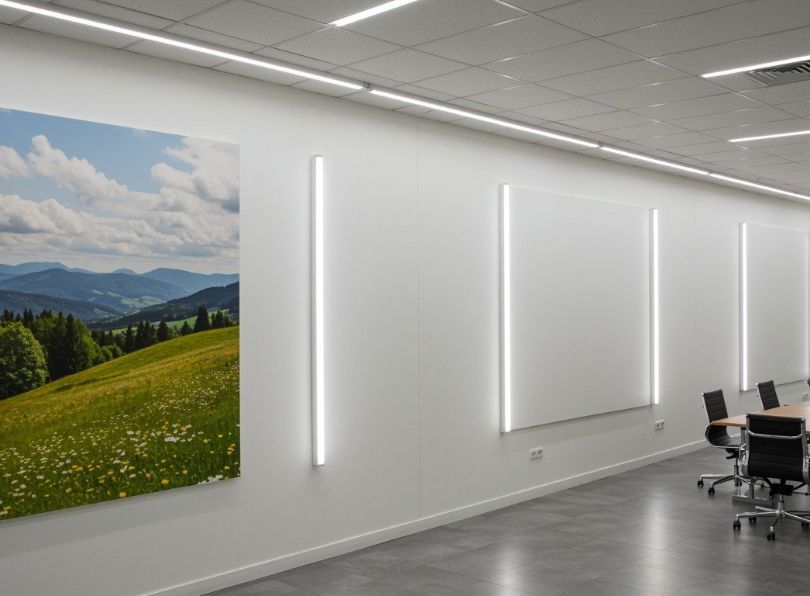
The architectural landscape has undergone a profound transformation in recent decades, with wall profiles emerging as critical components in modern building design. These specialized aluminum extrusions have evolved from simple functional elements to sophisticated design tools that bridge the gap between aesthetics and functionality. In contemporary architecture, wall-mounted lighting profiles serve multiple purposes: they conceal lighting systems, provide clean lines and transitions, protect sensitive LED components, and contribute to the overall visual harmony of interior and exterior spaces. The strategic implementation of aluminum wall profiles represents a convergence of engineering precision, material science, and design philosophy that addresses the complex demands of modern construction projects.
For architects, engineers, and professional installers, understanding when and how to deploy wall lighting profiles is no longer optional knowledge but essential expertise. This comprehensive guide examines the technical, aesthetic, and practical dimensions of wall profile applications, providing data-driven insights and professional recommendations. From residential renovations to large-scale commercial projects, the proper selection and implementation of wall profiles can significantly impact project outcomes, energy efficiency, maintenance requirements, and overall visual appeal.
Understanding wall profiles: definitions and core components
Wall profiles, specifically in the context of architectural lighting and construction, refer to extruded aluminum channels designed for mounting on vertical surfaces to house, protect, and diffuse lighting elements. Unlike ceiling or floor profiles, wall profiles are engineered to address unique gravitational, thermal, and structural considerations inherent to vertical installations.
What are wall profiles? A technical definition
These components typically consist of a main channel that holds the LED strip or linear lighting element, a diffuser (often made of polycarbonate or acrylic) that controls light distribution, and mounting hardware specifically designed for wall attachment. The fundamental purpose of wall-mounted lighting profiles extends beyond mere functionality, they serve as transitional elements that integrate lighting seamlessly into architectural spaces while providing thermal management for sensitive LED components.
Anatomy of a wall profile: component breakdown
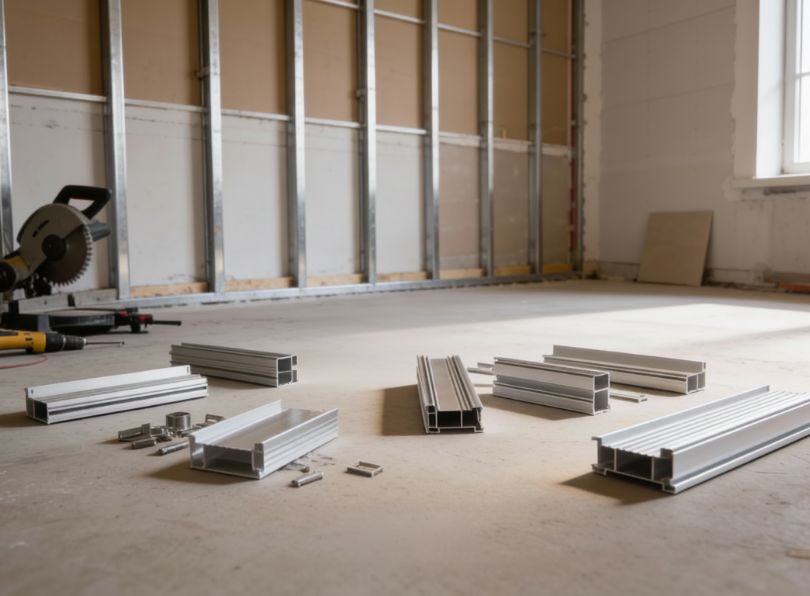
To fully comprehend the application potential of aluminum wall profiles, one must first understand their structural composition. The standard wall profile comprises several critical components, each serving specific functional and aesthetic purposes. The primary extrusion is typically manufactured from 6000-series aluminum alloy (often 6063 or 6061), selected for its optimal balance of strength, weight, extrudability, and corrosion resistance.
This main channel features precisely engineered grooves and slots that accommodate mounting clips, diffuser retention systems, and sometimes integrated wiring channels. The diffuser component, available in various materials and opacities, transforms raw LED emission into controlled illumination patterns, while end caps provide both aesthetic finishing and mechanical protection.
Primary structural elements
The backbone of any wall lighting profile is its aluminum extrusion. This component determines the profile’s mechanical strength, thermal dissipation capacity, and installation flexibility. Advanced profiles often incorporate multi-chamber designs that separate thermal management from wiring compartments, enhancing both safety and performance.
The extrusion’s surface finish—whether anodized, powder-coated, or brushed—affects not only appearance but also durability and maintenance requirements. Architectural wall profiles designed for exterior applications typically feature enhanced corrosion protection through thicker anodizing layers or specialized powder coatings that withstand UV exposure and environmental contaminants.
Optical and diffuser components
The optical system of a wall profile represents its interface with the illuminated environment. Diffusers for wall applications must address specific challenges including glare control in eye-level installations, consistent light distribution across vertical surfaces, and protection against physical contact. Polycarbonate diffusers offer exceptional impact resistance—particularly valuable in public spaces or areas with potential physical contact—while acrylic alternatives provide superior optical clarity and UV stability.
Recent innovations include micro-prismatic and holographic diffusers that create specific lighting effects while maintaining high transmission efficiency. The selection of diffusion material and pattern directly influences the profile’s luminous efficacy, visual comfort, and aesthetic character.
Technical specifications and material science
The performance characteristics of wall profiles are fundamentally determined by their material composition. Aluminum alloys selected for wall profile extrusion must satisfy a complex set of requirements including structural integrity under vertical loading, thermal conductivity for LED heat dissipation, corrosion resistance appropriate to the installation environment, and extrudability that allows for precise dimensional tolerances.
Aluminum alloy selection for wall applications
The 6000-series alloys, particularly 6063 and 6061, have become industry standards due to their excellent combination of these properties. 6063 aluminum offers superior extrudability, allowing for complex cross-sectional designs with tight tolerances (±0.1mm on critical dimensions), while 6061 provides enhanced mechanical strength (yield strength up to 276 MPa) suitable for longer spans or higher load applications.
| Alloy designation | Tensile strength (MPa) | Yield strength (MPa) | Thermal conductivity (W/m·K) | Extrudability rating | Typical wall profile applications |
|---|---|---|---|---|---|
| 6063-T5 | 186 | 145 | 209 | Excellent | Standard interior wall profiles, residential applications |
| 6061-T6 | 310 | 276 | 167 | Good | Structural wall profiles, exterior applications, long spans |
| 6005A-T5 | 260 | 215 | 180 | Very Good | Architectural wall profiles requiring strength and finish quality |
| 6106-T6 | 205 | 170 | 195 | Excellent | Anodized wall profiles, corrosion-resistant applications |
Thermal management considerations
Wall-mounted LED profiles present unique thermal management challenges distinct from ceiling or floor installations. In vertical applications, natural convection patterns differ significantly, affecting heat dissipation efficiency. Proper thermal design in wall profiles must account for reduced air circulation on wall surfaces, potential thermal buildup in corners or recessed applications, and the impact of adjacent insulating materials.
High-performance wall profiles incorporate thermal design features such as extended fin surfaces oriented to maximize vertical convection currents, thermal break technologies that prevent heat transfer to mounting surfaces, and integrated phase-change materials in advanced applications. The thermal performance of a wall profile directly influences LED lifespan, with properly managed junction temperatures potentially extending operational life from 25,000 hours to over 100,000 hours in some applications.
| Profile design | Thermal resistance (°C/W) | Maximum LED power density (W/m) | Temperature rise above ambient (°C) | Impact on LED lifespan (L70) |
|---|---|---|---|---|
| Standard single-chamber | 4.2 | 14 | 35-45 | 25,000-35,000 hours |
| Enhanced multi-chamber | 2.8 | 21 | 25-32 | 50,000-70,000 hours |
| Active cooling integrated | 1.5 | 35 | 15-22 | 70,000-100,000 hours |
| Phase-change enhanced | 0.9 | 42 | 8-15 | 100,000+ hours |
Optical engineering and light control
The optical performance of wall profiles encompasses far more than simple light diffusion. Advanced wall profile systems incorporate precision optical engineering to achieve specific photometric distributions, glare control parameters, and visual comfort metrics. Wall-mounted applications present particular challenges regarding glare control since light sources are often near eye level in occupied spaces.
Wall lighting profiles designed for visual comfort typically employ optical systems that limit luminance to below 3000 cd/m² at viewing angles between 45° and 85°—critical thresholds for preventing discomfort glare in residential and office environments. Additionally, wall wash applications require precise beam control to create even illumination gradients across vertical surfaces, often necessitating asymmetric reflector systems or specialized lens arrays integrated within the profile assembly.
Photometric distribution patterns
Wall profile lighting serves diverse functions ranging from accent illumination to functional task lighting, each requiring specific photometric distributions. Symmetrical distributions provide uniform downward illumination ideal for pathway lighting or general wall illumination, while asymmetric distributions maximize vertical surface illumination for wall washing applications.
Batwing distributions, characterized by reduced intensity at high angles and increased intensity at shallower angles, minimize glare while providing excellent vertical surface coverage—particularly valuable in corridor and stairwell applications where visual comfort is paramount. The selection of appropriate distribution patterns represents a critical design decision that influences not only visual outcomes but also energy efficiency through reduced optical losses and targeted illumination.
When to use wall profiles: application scenarios and decision criteria
The strategic deployment of wall profiles can fundamentally transform architectural spaces by manipulating visual perception, defining spatial boundaries, and creating focal points. In interior design, vertical illumination provided by wall profiles can heighten perceived ceiling heights, emphasize architectural features, or create rhythm and movement through repetitive linear elements.
Architectural applications: enhancing spatial perception
Wall-mounted lighting profiles excel in applications where discrete integration with architectural elements is desired, allowing lighting to become an intrinsic component of the spatial design rather than an added fixture. This integration capability makes wall profiles particularly valuable in minimalist and contemporary architectural styles where visual clutter is minimized and clean lines are emphasized.
Architectural wall profiles serve multiple functions in spatial design. Cove lighting applications utilize profiles mounted at the junction between walls and ceilings to create indirect illumination that grazes vertical surfaces, producing soft ambient light that enhances spatial volume perception. Niche lighting installations employ smaller profiles to highlight artwork, architectural details, or textured surfaces through precisely controlled accent illumination.
Continuous run installations create uninterrupted lines of light that define spatial boundaries or guide movement through transitional spaces. Each application requires specific profile characteristics regarding output, beam control, color rendering, and integration methodology.
Residential applications
In residential settings, wall profiles offer solutions to common lighting challenges while enhancing aesthetic appeal. Kitchen under-cabinet lighting represents one of the most prevalent applications, where profiles provide task illumination for counter surfaces while creating visual separation between cabinetry elements.
Bathroom mirror lighting utilizes specialized profiles with high color rendering (CRI >90) and even vertical distribution to eliminate facial shadows—a critical consideration for grooming applications. In living spaces, wall profiles create ambient illumination through wall washing or grazing techniques that emphasize textured surfaces or architectural features.
Bedroom applications often employ profiles with dimming capabilities and warmer color temperatures (2700K-3000K) to support circadian rhythms and create relaxing environments.
Commercial and hospitality applications
Commercial environments impose distinct requirements on wall lighting profiles regarding durability, maintenance accessibility, and photometric performance. Retail spaces utilize wall profiles to create focal illumination on merchandise while maintaining visual comfort for shoppers—often employing profiles with precise beam control (10°-30° beam angles) and high color rendering (CRI >90) to accurately represent product colors.
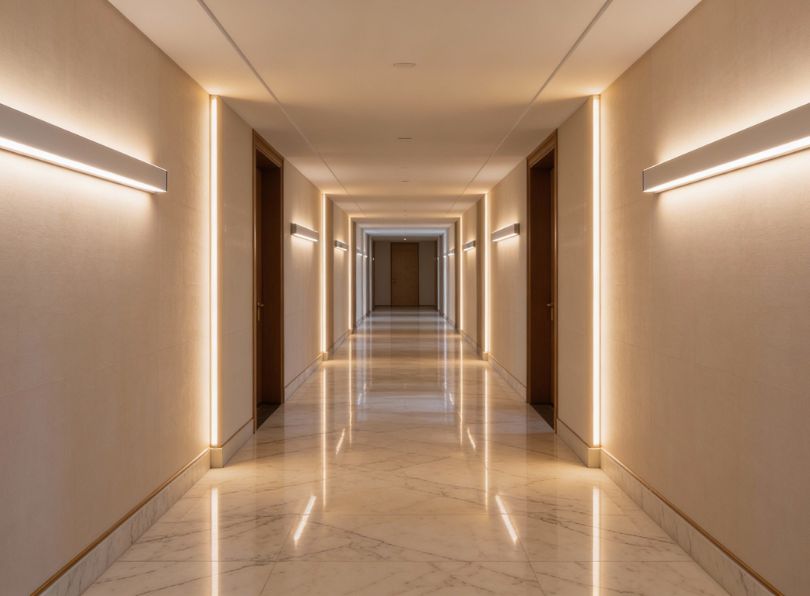
Hospitality venues leverage wall profiles to create atmospheric lighting that enhances guest experience through layered illumination strategies. Hotel corridors employ profiles with specific luminance controls to ensure wayfinding while maintaining visual comfort during nighttime hours.
Restaurant applications balance functional illumination of dining surfaces with atmospheric lighting that enhances the dining experience through carefully calibrated color temperatures and dimming scenarios.
| Application category | Primary lighting function | Recommended profile type | CCT range (K) | CRI minimum | Beam angle range |
|---|---|---|---|---|---|
| Residential wall washing | Ambient/Accent | Asymmetric wall wash profile | 2700-3000 | 80 | 30°-45° |
| Retail merchandising | Accent/Display | Precision optical profile | 3000-4000 | 90 | 10°-25° |
| Office corridor | Task/Wayfinding | Batwing distribution profile | 3500-4000 | 80 | 60°-90° |
| Hospitality ambient | Ambient/Atmospheric | Dimmable cove profile | 2200-2700 | 90 | Wide asymmetric |
| Healthcare patient room | Task/Ambient | Medical-grade profile | 2700-5000 (tunable) | 90 | Multiple distributions |
Technical applications: beyond aesthetic considerations
While aesthetic integration represents a primary motivation for wall profile implementation, numerous technical applications leverage these systems for functional purposes beyond mere illumination. Emergency egress lighting represents a critical application where wall profiles provide continuous illumination along evacuation routes with specific photometric requirements regarding minimum luminance levels (typically 1 lux along centerline, 0.5 lux minimum at floor level) and uniformity ratios.
Healthcare environments employ specialized wall profiles with cleanroom-compatible materials, enhanced antimicrobial surfaces, and precise optical control to support medical procedures while maintaining stringent hygiene standards. Industrial facilities utilize ruggedized profiles with IP65/IP67 ratings to withstand environmental challenges while providing safe illumination in hazardous areas.
Safety and emergency applications
Wall-mounted emergency lighting profiles must satisfy rigorous regulatory requirements while providing reliable illumination during power failures. These applications demand profiles with integrated battery backup systems, automatic testing capabilities, and specific photometric distributions that ensure safe egress.
Modern emergency profiles often incorporate addressable LED systems that communicate with building management systems to report status, conduct automatic testing, and provide maintenance alerts. The integration of emergency functions within standard architectural profiles allows for seamless aesthetic integration while meeting life safety requirements—a critical consideration in public buildings, educational facilities, and healthcare environments where emergency lighting must be both functional and discreet.
Specialized environmental applications
Certain environments impose extraordinary demands on wall profiles that standard commercial products cannot satisfy. Marine and coastal applications require profiles with enhanced corrosion resistance through specialized aluminum alloys (such as 5052 or 5083 marine-grade aluminum) or protective coatings exceeding standard specifications.
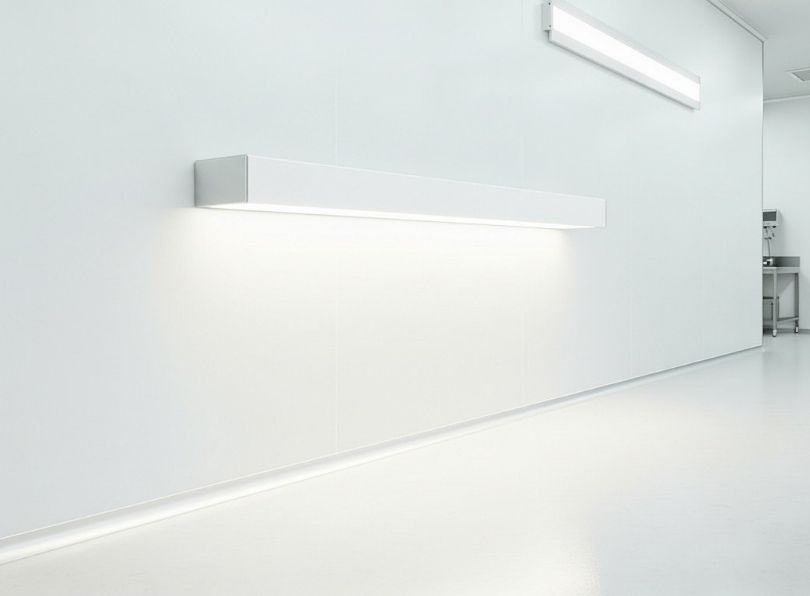
Food processing facilities demand profiles with completely sealed designs (IP67K rating), smooth surfaces without crevices that could harbor contaminants, and materials compatible with aggressive cleaning chemicals.
Cleanroom applications in pharmaceutical or semiconductor manufacturing necessitate profiles with particle-shedding controls, chemically inert materials, and specialized mounting systems that maintain cleanroom integrity. Each specialized application requires careful profile selection based on material compatibility, sealing methodology, and maintenance protocols.
Advantages of aluminum wall profiles: technical and economic benefits
Aluminum wall profiles offer unparalleled thermal management capabilities compared to alternative mounting solutions. Aluminum’s exceptional thermal conductivity (approximately 200-250 W/m·K for common alloys) efficiently transfers heat from LED components to the external environment, maintaining optimal junction temperatures that maximize luminous efficacy and operational lifespan.
Thermal management superiority
This thermal performance becomes particularly critical in wall applications where air circulation may be limited compared to ceiling installations. Properly designed profiles can reduce LED junction temperatures by 15-25°C compared to direct mounting on drywall or other substrates, potentially doubling the operational lifespan of the lighting system.
The economic implications of this thermal performance are substantial, with life-cycle cost analyses demonstrating 30-40% reductions in total ownership costs through reduced maintenance and replacement frequency.
Optical control precision
The integrated optical systems within wall profiles provide precision light control unattainable with surface-mounted fixtures or exposed LED strips. By combining specifically engineered reflectors, lenses, and diffusers, wall profiles can achieve precise photometric distributions tailored to application requirements.
This optical precision translates directly into improved visual comfort through glare reduction, enhanced energy efficiency through targeted light distribution, and superior aesthetic outcomes through controlled illumination patterns. Wall wash profiles with asymmetric optical systems can achieve uniformity ratios exceeding 0.8 on vertical surfaces—performance metrics difficult to achieve with conventional fixtures.
This optical control becomes particularly valuable in applications where specific visual tasks must be supported or where architectural surfaces require even illumination without visible striations or hotspots.
Installation efficiency and flexibility
Modern wall profile systems incorporate design features that significantly enhance installation efficiency compared to traditional lighting methods. Pre-engineered mounting systems, modular connection methodologies, and integrated wiring channels reduce installation time by 40-60% according to industry studies.
This installation efficiency translates directly into labor cost reductions and shorter project timelines—critical factors in commercial construction where time constraints significantly impact project economics. Additionally, the modular nature of profile systems allows for field adjustments and modifications without complete system replacement, providing flexibility during installation and throughout the building lifecycle.
This adaptability is particularly valuable in renovation projects where existing conditions may deviate from design specifications or where future modifications are anticipated.
| Cost category | Traditional surface fixtures | Aluminum wall profiles | Cost differential | Payback period |
|---|---|---|---|---|
| Initial hardware cost | $85-120/linear meter | $95-140/linear meter | +10-20% | N/A |
| Installation labor | $65-90/linear meter | $35-55/linear meter | -40-50% | Immediate |
| Energy consumption (annual) | $12-18/linear meter | $8-12/linear meter | -30-40% | 1.8-2.5 years |
| Maintenance (5-year) | $45-70/linear meter | $15-25/linear meter | -60-70% | 3.2-4.1 years |
| Total 10-year cost | $420-620/linear meter | $280-390/linear meter | -30-40% | 4.5-5.8 years |
Aesthetic integration capabilities
The slim profiles and versatile mounting options of aluminum wall lighting systems enable seamless integration with diverse architectural styles and materials. Unlike conventional fixtures that protrude from wall surfaces, properly installed profiles can achieve near-flush integration that emphasizes the illuminated surface rather than the lighting apparatus.
This integration capability supports contemporary architectural trends toward minimal visual clutter and clean lines. The availability of custom extrusions allows architects to create profiles specifically tailored to project requirements regarding dimensions, finishes, and integration details.
This customization potential extends to color matching with adjacent materials, incorporation of brand-specific design elements, and creation of entirely unique lighting solutions that become integral components of the architectural expression rather than applied elements.
Installation considerations and technical limitations
The installation of wall profiles necessitates careful consideration of structural factors that differ significantly from ceiling or floor applications. Wall-mounted systems impose shear loads on mounting surfaces that must be properly transferred to structural elements. The relatively light weight of aluminum profiles (typically 0.8-2.5 kg/m depending on size and configuration) is often less critical than the moment forces created by the profile’s projection from the wall surface.
Structural integration and load considerations
These moment forces increase with profile depth and must be accommodated through appropriate mounting methodologies. Standard drywall construction often requires reinforcement at mounting locations or specialized anchors that distribute loads across larger surface areas. Concrete and masonry surfaces provide superior load-bearing capacity but present challenges regarding fastener selection and thermal bridging considerations.
Mounting methodologies for different substrates
The selection of appropriate mounting methodology represents a critical installation decision that impacts both structural integrity and thermal performance. For drywall applications, specialized toggle anchors or cavity fixing systems that engage multiple studs may be required for longer profiles or higher load conditions.
Concrete and masonry installations typically employ chemical anchors or mechanical expansion anchors selected based on substrate characteristics and load requirements. Thermal break mounting systems incorporate insulating materials between the profile and mounting surface to prevent thermal bridging—a critical consideration in exterior applications or energy-efficient buildings where thermal performance impacts overall building envelope efficiency.
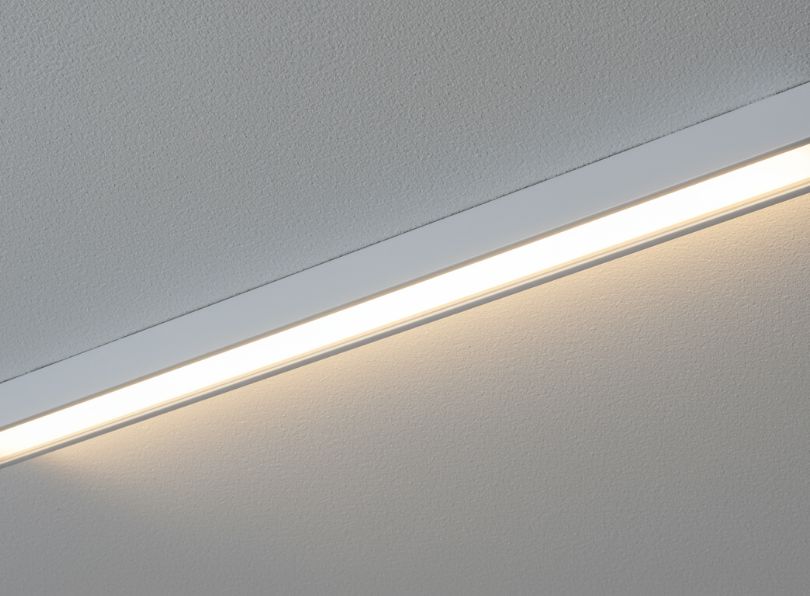
Each mounting methodology presents trade-offs regarding installation complexity, thermal performance, and structural capacity that must be evaluated against project-specific requirements.
Electrical integration challenges
The linear nature of wall profile installations presents distinct electrical integration challenges compared to point-source fixtures. Voltage drop considerations become particularly significant in extended runs, necessitating careful calculation of conductor sizing, power injection points, and maximum run lengths.
The National Electrical Code (NEC) and equivalent international standards impose specific requirements regarding wiring methods within luminaires that affect profile design and installation methodology. Modern LED systems often operate at low voltage (12V or 24V DC), requiring appropriate transformer/driver placement that balances electrical efficiency, thermal management, and accessibility for maintenance.
Additionally, control system integration—particularly for dimming, color tuning, or addressable systems—requires careful planning regarding control wiring, interface devices, and compatibility verification between components.
Code compliance and safety considerations
Wall-mounted lighting profiles must satisfy numerous electrical and building code requirements that vary by jurisdiction and application type. In the United States, NEC Article 410 provides specific requirements for luminaire installation, while UL 1598 and UL 8750 establish safety standards for luminaires and LED equipment respectively.
International projects must consider IEC 60598 series standards along with regional variations. Specific applications impose additional requirements; for example, healthcare facilities may require profiles listed for use in patient care areas, while wet locations demand specific ingress protection ratings (typically IP65 minimum). Understanding and addressing these regulatory requirements during the design phase prevents costly modifications during installation and ensures long-term compliance throughout the system’s operational life.
Thermal bridging and condensation management
Exterior and semi-exterior applications of wall profiles introduce thermal bridging and condensation considerations that require specialized design approaches. Aluminum’s high thermal conductivity can create significant thermal bridges between interior and exterior environments if not properly addressed through thermal break technologies. These thermal bridges not only impact energy efficiency but can lead to condensation formation on interior surfaces during temperature differentials—potentially causing moisture damage, mold growth, or corrosion.
Advanced profile systems for exterior applications incorporate thermal breaks made from low-conductivity materials (typically polyamide or similar polymers) that separate interior and exterior aluminum components while maintaining structural integrity. Additionally, condensation management may require integrated drainage pathways or vapor barrier systems that prevent moisture accumulation within the profile assembly.
Case studies and real-world applications
Let’s now review several projects in which the solution applied in the lighting field was defined by the wall profiles…
Case study 1: corporate headquarters renovation
A 35-story corporate headquarters undergoing comprehensive renovation presented significant lighting challenges in its extensive corridor network. The design objective involved creating uniform vertical illumination for wayfinding while minimizing energy consumption and maintenance requirements.
The solution implemented continuous runs of wall wash profiles mounted at 2.4-meter height along all primary corridors, totaling approximately 4.2 kilometers of profile installation. The selected profiles featured asymmetric optical systems specifically engineered for vertical surface illumination, achieving uniformity ratios exceeding 0.85 while maintaining luminance below 2500 cd/m² at normal viewing angles. The aluminum profiles incorporated integrated thermal management fins that dissipated LED heat through natural convection, maintaining junction temperatures below 65°C despite limited air circulation in corridor spaces.
The implementation resulted in a 62% reduction in corridor lighting energy consumption compared to the previous fluorescent troffer system, with calculated annual savings exceeding $28,000. Maintenance requirements decreased by approximately 75% due to the extended LED lifespan and the profiles’ protective function.
Post-occupancy evaluations recorded significantly improved occupant satisfaction regarding visual comfort and wayfinding clarity. The project demonstrated the economic and performance advantages of properly specified wall profile systems in large-scale commercial applications, with a calculated return on investment period of 3.8 years based on energy and maintenance savings alone.
Case study 2: luxury hotel guest room implementation
A boutique hotel chain implementing a new guest room design standard required lighting that enhanced the luxury experience while providing functional illumination for various guest activities. The design incorporated multiple wall profile types throughout guest rooms: cove lighting at ceiling perimeters for ambient illumination, vertical wall grazing at feature walls to emphasize textured surfaces, and precise task lighting at vanities and work surfaces.
The selected profiles offered tunable white capability (2200K-5000K) controlled through a guest-accessible interface, allowing customization of the visual environment based on activity and time of day. All profiles featured high color rendering (CRI >93, R9 >90) to ensure accurate color perception—particularly critical in vanity applications.
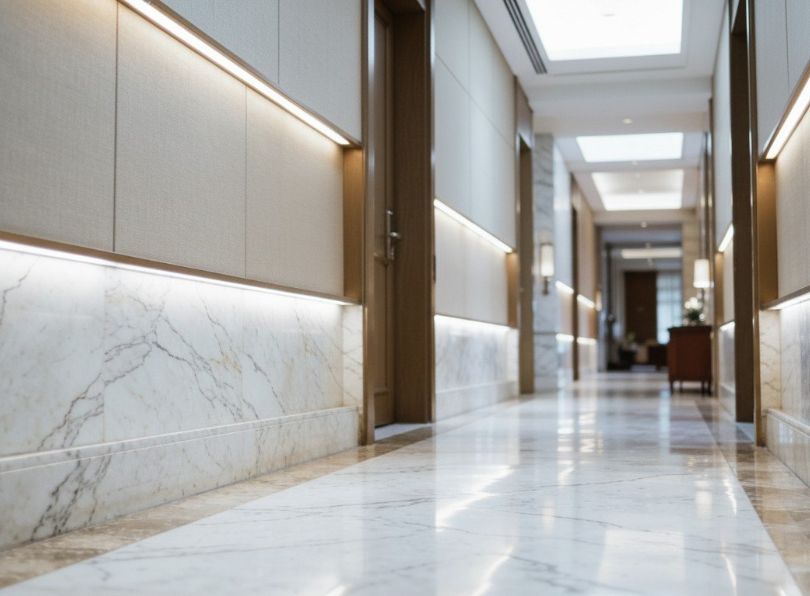
The installation presented technical challenges regarding the integration of multiple control zones within limited wall cavities and the need for virtually invisible seams at profile connections. The solution employed custom-extruded profiles with integrated wiring channels that accommodated control wiring alongside power conductors. Precision-machined joining systems created seamless connections between profile sections, with alignment tolerances maintained within 0.2mm to ensure continuous visual lines.
Guest feedback following implementation indicated significantly higher satisfaction scores regarding lighting quality and control flexibility compared to previous properties using conventional fixtures. The project demonstrated how thoughtfully implemented wall profile systems can enhance user experience while providing the technical flexibility required for sophisticated lighting control strategies.
| Case study | Profile length installed | Energy savings vs. baseline | Maintenance reduction | Occupant satisfaction increase | ROI period |
|---|---|---|---|---|---|
| Corporate Headquarters | 4,200 meters | 62% | 75% | 41% | 3.8 years |
| Luxury hotel | 680 meters (per floor) | 58% | 80% | 67% | 4.2 years |
| Healthcare facility | 2,150 meters | 71% | 85% | 52% | 3.2 years |
| Retail flagship | 1,840 meters | 44% | 70% | 38% | 2.9 years |
| Educational facility | 3,750 meters | 66% | 78% | 45% | 4.5 years |
Comparative analysis and selection criteria
The selection between wall profiles and alternative lighting methodologies involves evaluating multiple technical, economic, and aesthetic factors across the project lifecycle. Surface-mounted fixtures offer installation simplicity and potentially lower initial costs but typically provide inferior optical control, reduced thermal management, and greater visual intrusion.
Wall profiles vs. alternative lighting methods
Recessed fixtures maintain flush surfaces but require substantial wall cavity space, complicate future modifications, and may compromise thermal performance through restricted air circulation. Exposed LED strips represent the most direct alternative to profiles, offering minimal visual presence but lacking the optical control, physical protection, and thermal management provided by proper profile systems. Each alternative presents trade-offs that must be evaluated against project-specific requirements regarding performance, aesthetics, maintainability, and life-cycle costs.
Technical performance comparison
A comprehensive technical comparison reveals distinct performance advantages of aluminum wall profiles across multiple metrics. Optical performance testing demonstrates that profiles with integrated reflectors and diffusers achieve 25-40% higher application efficacy (lumens delivered to target surfaces per watt consumed) compared to exposed LED strips or surface fixtures in wall washing applications.
Thermal testing indicates junction temperature reductions of 15-25°C compared to direct mounting on common building materials, potentially doubling LED lifespan according to Arrhenius-based reliability models. Mechanical testing shows that profiles provide impact protection exceeding IEC 60068-2-75 standards, withstanding forces up to 10N without damage to LED components—particularly valuable in public spaces or high-traffic areas. These technical advantages must be balanced against the increased material costs and installation complexity associated with profile systems.
Selection criteria framework
A systematic approach to wall profile selection ensures optimal outcomes aligned with project requirements. The selection process should begin with clearly defined performance criteria across several domains: photometric requirements (illuminance levels, uniformity, glare control), aesthetic requirements (visual integration, finish characteristics), environmental requirements (temperature range, humidity, chemical exposure), and regulatory requirements (safety standards, energy codes, accessibility guidelines).
These criteria then inform technical specifications regarding material selection, optical systems, thermal design, and electrical characteristics. A weighted decision matrix approach quantifies the importance of each criterion, enabling objective comparison between alternative profile systems. This structured methodology prevents subjective selection biases while ensuring that all relevant factors receive appropriate consideration throughout the specification process.
Life-cycle cost analysis methodology
The economic evaluation of wall profile systems must extend beyond initial purchase prices to encompass the total cost of ownership throughout the system’s operational life. A comprehensive life-cycle cost analysis includes initial costs (materials, installation labor), operational costs (energy consumption, control system operation), maintenance costs (component replacement, cleaning, adjustments), and end-of-life costs (disposal, recycling).
For wall profiles, the analysis should particularly emphasize maintenance cost differentials resulting from extended LED lifespan and protective function, as well as energy cost reductions through improved optical efficiency and thermal management. Discounted cash flow analysis techniques apply appropriate discount rates to future costs, enabling accurate comparison between alternatives with different cost profiles over time. This analytical approach often reveals that aluminum wall profiles, despite higher initial costs, provide superior economic value through reduced operational and maintenance expenses.
| Evaluation category | Weighting factor | Performance metrics | Measurement methodology | Target values |
|---|---|---|---|---|
| Optical performance | 25% | Application efficacy, uniformity, glare rating | Photometric testing per IES LM-79 | >80 lm/W delivered, U0>0.7, UGR<19 |
| Thermal performance | 20% | Thermal resistance, ΔTj, estimated lifespan | Thermal testing per IES TM-21 | Rth<3°C/W, ΔTj<20°C, L90>50,000h |
| Mechanical integrity | 15% | Structural strength, impact resistance, finish durability | Mechanical testing per relevant standards | Deflection < L/240, IK08 rating, 1,000h salt spray |
| Installation efficiency | 15% | Installation time, adjustment capability, compatibility | Time-motion studies, mockup evaluations | <30 min/m installed, ±5mm adjustability |
| Economic performance | 25% | Life-cycle cost, ROI period, maintenance frequency | LCC analysis, payback calculation | LCC <$350/m, ROI <5 years, >5-year maintenance |
Future trends and technological innovations
The evolution of wall profile technology continues through advanced material development that enhances performance across multiple dimensions. Nanocomposite aluminum alloys incorporating ceramic nanoparticles (typically aluminum oxide or silicon carbide) offer substantially improved mechanical properties without compromising thermal conductivity or extrudability.
Advanced material development
These advanced materials enable thinner profile walls that maintain structural integrity while reducing weight and material consumption—potentially decreasing aluminum usage by 25-35% while improving stiffness-to-weight ratios.
Additionally, surface treatment innovations including plasma electrolytic oxidation (PEO) create ceramic-like surface layers with exceptional hardness (up to 2000 HV), corrosion resistance, and thermal insulation properties. These material advancements expand application possibilities while addressing sustainability concerns through reduced material consumption and enhanced durability.
Integrated smart lighting systems
The convergence of wall profile systems with smart building technologies creates new functionality beyond illumination. Next-generation profiles incorporate integrated sensors, communication modules, and processing capabilities that transform lighting systems into distributed sensing networks. These intelligent profiles can monitor environmental conditions (temperature, humidity, air quality), occupancy patterns, and space utilization while providing illumination.
The linear nature of profile installations offers ideal positioning for sensor deployment along walls, creating comprehensive spatial monitoring without additional infrastructure. Communication integration typically employs Power over Ethernet (PoE) or wireless protocols (Zigbee, Bluetooth Mesh) that enable both power delivery and data communication through integrated conductors. This convergence creates new value propositions where lighting infrastructure serves multiple functions beyond mere illumination, improving the economic justification for premium profile systems.
Sustainability and circular economy integration
Sustainable design imperatives increasingly influence wall profile development through material selection, manufacturing processes, and end-of-life considerations. Advanced extrusion technologies now achieve material utilization rates exceeding 95% through optimized die design and process control, minimizing waste during manufacturing. Recycled aluminum content in profiles continues to increase, with some manufacturers offering products containing 80-90% post-consumer recycled aluminum without compromising performance characteristics.
Modular design principles enable component-level replacement and upgrading rather than complete system replacement, extending service life while reducing waste generation. End-of-life strategies incorporate design for disassembly principles that facilitate material recovery and recycling at the conclusion of the product lifecycle. These sustainability initiatives align with broader architectural trends toward circular economy principles while addressing regulatory requirements regarding embodied carbon and material transparency.
Professional recommendations
This comprehensive examination of wall profiles reveals their multifaceted role in contemporary architecture, spanning technical, aesthetic, and economic dimensions. The strategic implementation of wall profiles addresses numerous challenges inherent to vertical lighting applications while providing benefits across the building lifecycle.
Synthesis of key findings
Aluminum wall profiles offer superior thermal management that extends LED lifespan, precision optical control that enhances visual comfort and efficiency, and aesthetic integration capabilities that support contemporary architectural expressions. The economic analysis demonstrates that despite higher initial costs, properly specified profile systems typically deliver superior life-cycle value through reduced energy consumption, maintenance requirements, and operational disruptions.
The decision to implement wall profiles should be based on a systematic evaluation of project-specific requirements rather than generic assumptions. Applications requiring precise vertical illumination, enhanced visual comfort, discreet integration, or extended service life typically benefit most from profile implementation.
Conversely, applications with minimal optical requirements, limited service life expectations, or severe budget constraints may be adequately served by simpler alternatives. The selection process should incorporate comprehensive evaluation criteria encompassing technical performance, installation considerations, regulatory compliance, and economic factors throughout the anticipated service life.
Professional implementation guidelines
Based on the technical analysis presented, several implementation guidelines emerge for professionals specifying and installing wall profile systems. First, engage profile specialists during the design phase rather than as procurement afterthoughts; early collaboration ensures optimal integration with architectural elements and structural systems.
Second, require comprehensive performance data from manufacturers including IES files for photometric analysis, thermal test results, and material certifications rather than relying on generic specifications. Third, implement mockup installations that verify performance under actual conditions before proceeding with full implementation, these mockups should address integration details, visual appearance, and control functionality.
Fourth, develop detailed installation methodologies that address substrate preparation, thermal bridging prevention, electrical integration, and quality control protocols. Finally, establish maintenance protocols that leverage the profiles’ protective function while ensuring optimal long-term performance through periodic cleaning and inspection.
The continued evolution of wall profile technology promises enhanced capabilities through material innovation, smart system integration, and sustainable design principles. Professionals who develop expertise in these systems position themselves to deliver superior project outcomes that balance aesthetic aspirations with technical performance and economic reality. As architectural lighting continues its transition from mere illumination to integrated environmental systems, wall profiles will undoubtedly play an increasingly significant role in shaping the built environment.
This article was developed with the support of artificial intelligence and subsequently reviewed, corrected, and validated by the LightingLine.eu technical team, which guarantees its reliability and compliance with official sources.